
Diamond lapping film has become an essential material for achieving exceptional surface finishing accuracy in precision manufacturing. Compared with traditional abrasives, diamond, aluminum oxide, silicon carbide, and cerium oxide lapping films provide unmatched consistency, durability, and control in polishing performance. Backed by XYT’s advanced production technology and expertise in TMT lapping film and MT Lapping Film solutions, these high-quality products help manufacturers enhance efficiency, meet strict tolerance requirements, and ensure superior surface quality across industries from optics to electronics.
1. Understanding Diamond Lapping Film in Precision Manufacturing
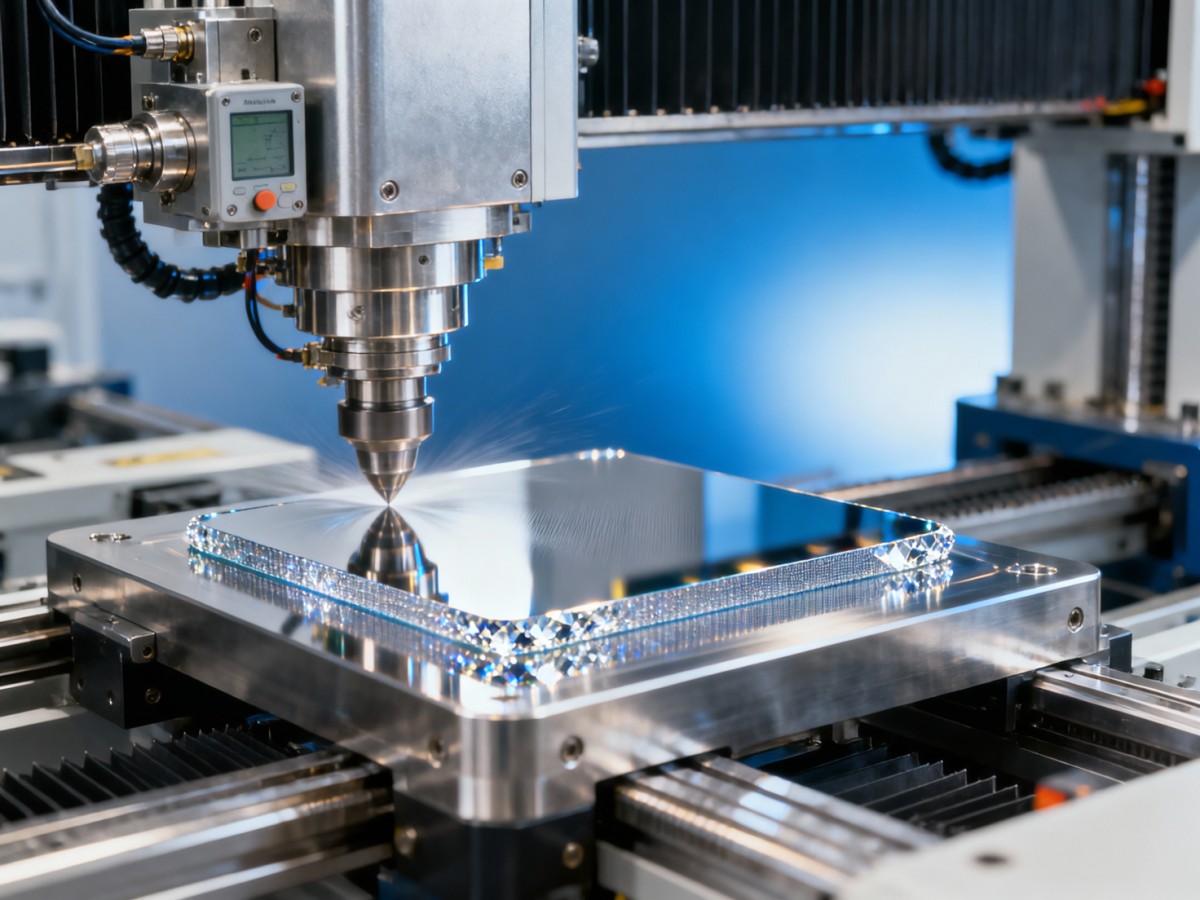
Diamond lapping film is a microfinishing material where industrial-grade diamond particles are uniformly coated onto a flexible polyester or polyimide backing. This engineered structure allows for consistent material removal at micro-levels, making it an indispensable tool in industries requiring sub-micron surface precision, such as fiber optics, semiconductors, optics, and electrical component fabrication.
In the electrical equipment and supplies sector, precision finishing directly influences component conductivity, insulation reliability, and connection integrity. The diamond lapping film helps reduce roughness to as low as Ra 0.01–0.03 μm, ensuring better surface contact and minimizing electrical losses, which are critical for connectors, metal contacts, and micro-motor components.
A typical diamond lapping film consists of three main layers: the resin bond matrix, diamond abrasive layer, and base film. Variations in diamond particle size—ranging from 0.1 µm to 45 µm—allow engineers to tailor the finishing process for rough grinding, fine polishing, or superfinishing applications. This flexibility makes it ideal for both automated lapping systems and manual polishing setups.
Compared with traditional abrasives like aluminum oxide or silicon carbide, diamond provides higher hardness (10 on the Mohs scale) and superior heat dissipation. These features result in smoother, faster, and more predictable polishing cycles, reducing total process time by approximately 25–40% in most industrial applications.
Key Technical Features of Diamond Lapping Film
- Uniform coating precision within ±2 µm across 10 meters of web length.
- High-temperature stability up to 120°C for consistent performance.
- Compatibility with aqueous or oil-based slurries.
- Available in particle grades: 0.1 µm, 0.3 µm, 1 µm, 3 µm, 6 µm, 9 µm, 15 µm, 30 µm, and 45 µm.
- Durable polyester backing thickness options: 75 µm, 100 µm, 125 µm.
2. Benefits of Diamond Lapping Film for Surface Finishing Accuracy
The diamond lapping film offers several measurable improvements in surface finishing accuracy compared with conventional polishing paper or slurry-based abrasives. Across XYT’s diverse client base in electronics and optical manufacturing, productivity gains of 20–35% have been reported when switching to precision diamond film systems.
The key advantage lies in the micro-uniformity of diamond particles, which control the cutting rate with exceptional precision. The resulting surfaces exhibit nanometer-level flatness essential for optical connectors, metal electrodes, and precision sensor contacts. Moreover, reduced debris and stable friction coefficients translate into fewer polishing defects and longer equipment lifespan.
Comparison: Diamond vs. Other Abrasives
The following table contrasts diamond lapping film with alternative abrasive films in terms of cutting efficiency, longevity, and cost-performance ratio across common manufacturing tasks.
As shown, diamond’s superior hardness and cutting stability reduce the number of processing passes required, thereby improving throughput by up to 40%. The predictable abrasive wear rate also facilitates CNC integration, enabling automated polishing that meets ±0.001 mm tolerance levels.
3. Applications in Electrical Equipment and Precision Components
The electrical equipment and supplies industry relies heavily on smooth surface interfaces to optimize current transmission, heat management, and mechanical coupling. Diamond lapping film is extensively used in finishing conductive pins, contact plates, and high-precision sensor assemblies. In micro-motors and rotor shafts, uniform polishing prevents micro-cracks that cause performance inefficiency and vibration noise beyond 0.02 mm amplitude levels.
In optical and fiber communication components, the final polish determines light transmission efficiency and signal loss. Testing shows that when lapping film with 1 µm diamonds is used on ferrules, insertion loss remains below 0.25 dB—meeting ITU-T standards for optical connectors. Similar precision is crucial for producing magnetic heads, relay contacts, and CPU heat spreaders.
Industry Use Cases
- Optical Connectors: Achieve uniform ferrule end-face geometry meeting ±0.05° apex offset requirements.
- Metal Conductors: Remove surface oxides while maintaining dimensional integrity within ±0.002 mm.
- Aerospace Components: Polish turbine blades and crankshaft pins to Ra 0.02–0.05 µm for friction reduction.
- Consumer Electronics: Enhance touch panel transparency through consistent glass edge finishing.
By integrating diamond lapping films into automated polishing stations, manufacturers can standardize surface quality across large batches, ensuring repeatability with less than 2% deviation between lots. This reproducibility is especially valuable in serial manufacturing of high-value electrical parts.
4. Selection and Performance Parameters for Optimal Results
Choosing the right diamond lapping film depends on several operational factors—abrasive grain size, backing type, lubrication system, and contact pressure. XYT supports over 30 customizable configurations to address different material properties and finishing demands. Proper matching of these factors ensures optimal performance and consistent finish.
The table below summarizes typical selection recommendations for common workpiece materials in electrical manufacturing and metal component finishing.
Correct process parameters reduce the probability of under-polishing or micro-chipping. Maintaining rotation speed at 150–300 rpm for small parts or 500–800 rpm for flat plates ensures thermal stability and uniform wear distribution during use.
5. Implementation, Maintenance, and Quality Assurance
To ensure consistent results, manufacturers must establish a structured polishing workflow. XYT’s recommended five-step implementation sequence involves initial rough lapping, intermediate leveling, pre-polish with diamond film (6 µm), final finish (1 µm or below), and inspection under 200× magnification. Each stage generally requires 3–8 minutes depending on component geometry.
Routine maintenance plays a crucial role. Lapping films should be replaced after 1,000–1,200 cycles to avoid surface irregularities beyond ±0.002 mm. Proper cleaning of the base platen with isopropyl alcohol every 500 cycles keeps adhesion consistent. Using XYT’s compatible lapping oil at flow rates of 10–20 mL/min controls thermal load and prevents clogging.
Inspection and Quality Management
- Conduct sampling inspection for 1 in every 200 parts using optical interferometry to verify planarity within λ/10 limits.
- Record film temperature and wear rate once per shift; allowable temperature deviation should not exceed ±5°C.
- For batch traceability, assign lot codes tied to coating line production date and resin formulation number.
Consistent documentation ensures alignment with ISO 9001 and RoHS compliance, which are essential certification standards in electrical and mechanical device manufacturing environments.
6. Future Trends and Evolution of Surface Finishing Technology
The evolution of surface finishing is heading toward intelligent automation, environmentally conscious materials, and nano-scale performance targets. Over the next five years, industry analysts predict a 12–15% compound annual growth rate in demand for precision lapping film within electrical and optic component manufacturing sectors.
Emerging innovations include hybrid films combining diamond and cerium oxide for dual-phase finishing, as well as machine-learning-controlled polishing systems capable of real-time feedback adjustment within ±0.0005 mm tolerances. Such systems will integrate predictive maintenance algorithms and adaptive slurry dispensing, reducing consumable waste by at least 18%.
XYT continues to enhance its proprietary coating formulation and fully automated manufacturing lines to achieve sub-micron uniformity across film webs exceeding 100 meters in continuous production. By adopting advanced RTO exhaust gas treatment and Class-1000 cleanroom environments, the company ensures both ecological sustainability and premium product reliability.
These advancements support global industries—automotive, aerospace, information technology, and consumer electronics—in meeting high-precision assembly requirements while aligning with green manufacturing regulations and international quality benchmarks.
Conclusion and Next Steps
Diamond lapping film drives measurable progress in manufacturing accuracy, energy efficiency, and equipment reliability across the electrical equipment and precision engineering landscape. From enhancing conductor interfaces to ensuring optical clarity and dimensional uniformity, the technology supports global producers in maintaining their competitive edge.
As a trusted supplier with robust R&D capability and extensive international presence, XYT provides comprehensive abrasive and polishing solutions tailored to every stage of surface finishing—from pre-grinding to super-polish applications. Our customers across more than 85 countries continue to rely on XYT products for their consistent quality, process efficiency, and innovative engineering support.
To explore customized diamond lapping film solutions or learn more about how XYT’s technology can optimize your precision manufacturing process, contact our technical specialists today to receive tailored recommendations and application support.
Awesome! Share to:
Related Posts
- ◉ China Tightens Abrasive Exports: Carbon Footprint Declarations Required for US and EU Shipments from August 15
- ◉ EU REACH Rules for Nanoparticle Silica Take Effect August 15
- ◉ When Is Cerium Oxide Film Used for Connector End-Face Finish?
- ◉ Diamond vs. Silicon Carbide Lapping Film for Connectors
- ◉ How Should MTP Polishing Parameters Be Tuned?
Get in Touch
*We respect your confidentiality and all information are protected.