
NEWS
Lapping film problems rarely announce themselves at the start of a connector project. They usually appear later as unstable end-face geometry, polishing inconsistency, failed inspection, repeated process tuning, and delivery pressure that spreads across production, quality, and customer communication.
In fiber optic connector work, a small mismatch in abrasive type, particle size, backing stability, or process compatibility can extend lead time far more than expected. That is why lapping film is not just a consumable choice. It is a schedule, quality, and risk-control decision.
The issue matters even more in electrical equipment and precision connectivity markets, where connectors must meet tight optical and mechanical standards. When polishing materials drift from process needs, the cost is not limited to scrap. It can also affect qualification, field reliability, and confidence in the whole build plan.
Why lapping film has a direct impact on connector project timing
A connector project often looks stable on the planning board long before polishing stability is truly proven. Procurement may be complete, tooling may be installed, and polishing recipes may appear transferable from prior jobs.
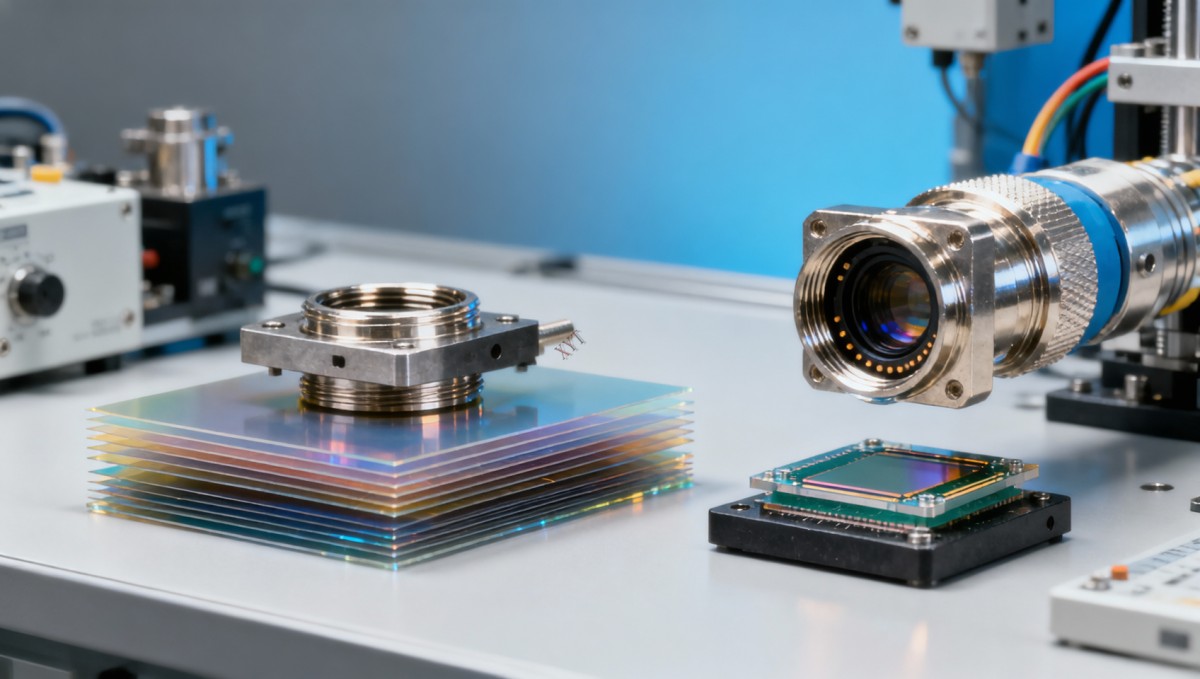
The hidden problem is that lapping film sits at the intersection of material science and process control. A minor deviation can alter removal rate, scratch behavior, heat generation, slurry interaction, pad response, and end-face geometry.
For connector programs, those shifts show up in three ways.
- Cycle times increase because polishing steps require more passes.
- Yield falls because apex offset, radius, or scratch criteria drift out of range.
- Validation slows because teams spend time isolating whether the issue is film, machine, fixture, pad, or operator practice.
A schedule delay is often blamed on production execution. In reality, the root cause may be a lapping film that never matched the connector structure or the intended polishing sequence.
What lapping film really does in connector finishing
Lapping film is an engineered abrasive layer carried on a film backing. In connector polishing, it removes controlled amounts of ferrule and fiber material across staged steps.
The objective is not simply to make the end face look smooth. The process must create consistent geometry, low surface roughness, acceptable undercut or protrusion, and a defect profile that passes optical inspection.
Different film constructions behave differently. Abrasive mineral, particle distribution, coating uniformity, adhesive performance, film thickness, and backing stiffness all influence polishing results.
This is why one lapping film can produce fast stock removal but leave deeper scratches, while another may refine the surface beautifully yet extend takt time beyond what the project can absorb.
When a connector line is scaled, these differences become operational risks rather than laboratory details.
The risks that are most likely to delay connector projects
Most delays linked to lapping film do not come from dramatic failure. They come from accumulated instability. Several risk categories deserve close attention.
Risk 1: wrong abrasive for the substrate and stage
Connector polishing is not one step. It is a sequence of removal and refinement. Using the wrong abrasive at any stage changes the process window.
Diamond lapping film can deliver aggressive removal and long life, especially on hard materials. That is useful in coarse or shape-correction stages.
But if the same approach is carried into later finishing without careful control, scratch depth or subsurface effects may increase the number of downstream polishing steps.
Aluminum oxide often offers a balanced cut and finish response, making it widely compatible with fiber optic polishing sequences. Silicon carbide can correct flatness quickly because of its sharp grain structure, but it also needs disciplined stage control.
Cerium oxide and silicon dioxide are often more relevant in fine finishing and surface refinement, where chemical-mechanical effects or ultra-low scratch behavior matter more than stock removal speed.
Risk 2: particle size progression that looks logical but performs poorly
A process route may appear reasonable on paper, yet still create delays if the grit progression is too wide, too narrow, or poorly sequenced.
If the jump from one lapping film grade to the next is too large, the later step spends excessive time removing the earlier damage pattern. If the jump is too small, the line carries unnecessary steps and lower throughput.
In connector work, common ranges often move from coarse lapping around 80 µm to 30 µm, then intermediate polishing around 15 µm to 3 µm, then fine polishing from 1 µm to 0.3 µm, and finally ultra-fine finishing near 0.1 µm or below.
Those ranges are useful references, not automatic answers. Ferrule material, connector type, fixture pressure, pad hardness, and quality targets decide whether the sequence is efficient or risky.
Risk 3: unstable film quality between lots
A process can be validated successfully and still fail later if incoming lapping film varies by lot. Narrow particle size distribution is critical because broad variation changes cutting predictability.
Even when average abrasive size looks acceptable, inconsistent coating density or backing behavior can shift the finish result. That creates a difficult troubleshooting pattern.
Early production lots may pass. Mid-volume builds may start showing random scratch issues, geometry drift, or shortened film life. Because the change appears gradual, teams often spend too long adjusting machine settings before checking consumable consistency.
Risk 4: overreliance on machine parameter tuning
When polishing quality slips, the first response is often to change pressure, speed, dwell time, or pad condition. That can help, but it also hides film mismatch.
If a lapping film inherently cuts too aggressively or too slowly for the connector design, parameter tuning may only move the defect elsewhere. Geometry may improve while scratches increase. Surface smoothness may improve while takt time collapses.
This kind of compensation creates fragile production. It works only under narrow conditions, usually until the next operator, next lot, or next ambient shift.
Risk 5: insufficient control of end-of-life behavior
A lapping film can perform well at the beginning of use and degrade in a non-linear way. Removal rate may fade slowly, while scratch behavior changes suddenly near the end of usable life.
If replacement criteria are unclear, one shift may discard film too early and increase consumable cost. Another shift may run it too long and trigger failures that require rework.
For projects under launch pressure, this inconsistency can distort planning assumptions about cost, output, and yield.
Risk 6: process contamination and storage mistakes
Lapping film is precise enough that poor storage can undermine performance. Dust, humidity, mishandling, edge damage, and uncontrolled exposure can all influence polishing quality.
Connector production often works to very fine visual and geometric criteria. A contamination issue can look like a film design issue, causing wasted analysis time and incorrect corrective action.
Why the industry pays more attention to this now
The tolerance for polishing inconsistency is shrinking. Connector projects now serve networks and devices that demand stable insertion loss, reliable return loss, and repeatable field performance.
At the same time, launch windows are tighter. Programs move from pilot to volume faster, often across multiple sites or partners. In that environment, lapping film variability becomes a business risk, not just a technical inconvenience.
Another reason is supply-chain scrutiny. Teams no longer assume any abrasive film with the same nominal micron size will behave the same way. More organizations now compare coating quality, backing uniformity, in-line inspection capability, cleanroom discipline, and traceability support from suppliers.
That shift has raised the value of manufacturers with deeper process control. Companies such as XYT, which combine precision coating lines, optical-grade Class-1000 cleanrooms, automated control, in-line inspection, and rigorous quality management, reflect what many projects now expect from polishing material sources.
Where connector delays usually begin in the decision process
Delays are often seeded long before the first production part is polished. They usually begin in one of four decision errors.
Copying a legacy polishing recipe
A prior connector program may look similar, yet use a different ferrule composition, geometry target, machine platform, or cleaning method. Reusing the same lapping film sequence can save time initially and cost much more later.
Approving by nominal grit size only
Two 1 µm films are not necessarily equivalent. Particle shape, distribution, binder chemistry, and backing quality can lead to different scratch profiles and material removal behavior.
Treating polishing materials as low-priority consumables
A line may invest heavily in polishing equipment and still under-specify the lapping film. This is common when material selection is seen mainly as a cost item instead of a process-capability factor.
Skipping structured incoming evaluation
Without incoming qualification, subtle variation reaches the line before anyone establishes a baseline. Once the project enters time-critical production, data collection becomes reactive instead of preventive.
How different lapping film materials affect connector outcomes
Material choice should reflect the polishing stage and substrate response, not only the desired speed. The table below summarizes practical considerations.
The important point is not that one abrasive is better than another. The real question is whether the lapping film matches the connector stage, quality target, and production rhythm.
The cost of getting lapping film wrong is broader than rework
Rework is the visible cost, but it is often not the largest one. Connector project delays caused by polishing instability affect several linked areas.
- Qualification schedules slip because test samples fail intermittently.
- Engineering hours rise because teams repeat root-cause analysis.
- Production planning becomes unreliable because cycle time assumptions no longer hold.
- Customer confidence weakens when shipments move from committed to conditional.
- Costing becomes distorted because consumable usage and scrap rates change together.
This is especially relevant in electrical equipment supply chains, where connector performance may influence larger assemblies, rack integration, or field deployment milestones.
Signals that a lapping film issue is building before failure becomes obvious
The best time to address lapping film risk is before rejection rates spike. Several early indicators deserve attention.
Longer polishing time without a planned process change
If operators need extra cycles to reach visual acceptance or geometry targets, removal behavior may be shifting.
Scratch patterns that become harder to classify
Random or mixed scratch signatures often suggest abrasive inconsistency, contamination, or poor stage transition.
More machine adjustment with less process stability
Frequent pressure or time tuning is a warning that the line is compensating for an unstable input rather than improving a stable process.
Differences between shifts or lots
If one shift passes and another struggles under the same recipe, the lapping film or its handling may be involved.
Geometry spread that widens before yields collapse
Apex offset, radius, and undercut variance can widen gradually. That spread often appears before outright failure rates rise.
A practical framework for evaluating lapping film before scale-up
A useful evaluation process should test more than immediate finish quality. It should also examine repeatability, lot behavior, and production fit.
Start with the connector requirement, not the consumable catalog
Define the actual polishing outcome needed. That includes geometry limits, visual criteria, surface roughness expectation, target throughput, and rework tolerance.
Check abrasive progression as a connected system
Each lapping film step should leave a damage pattern that the next step can remove predictably. Testing one grade in isolation is rarely enough.
Measure process robustness, not only best-case output
Run trials across more than one lot, operator, and film age condition. A lapping film that passes only under ideal conditions is likely to delay real production.
Include consumable life in the qualification window
Track how cut rate and finish quality change over the intended usage period. Early success can hide end-of-life instability.
Ask for evidence of manufacturing control
Traceability, clean production, precision coating, and in-line inspection matter because they reduce lot drift. In abrasive films, supplier capability often becomes process capability.
How supply quality influences connector polishing stability
The performance of lapping film starts upstream. Coating technology, slitting precision, storage discipline, and inspection methods all affect what reaches the polishing station.
This is one reason supplier depth matters in precision finishing. A manufacturer with proprietary formulations, automated control systems, and disciplined production environments is better positioned to keep abrasive distribution uniform and backing behavior stable.
In practice, that can support more predictable cutting action, reduced scratch depth, improved flatness, and steadier roughness results. Those traits do not sound dramatic, but they are exactly what protect connector schedules from hidden delay.
For teams comparing options, Abrasive Lapping Films and Papers for Precision Surface Finishing Solutions represents the kind of portfolio that is relevant when multiple abrasive materials, size ranges, and application formats must be aligned with optical and industrial polishing needs.
Typical connector project scenarios where lapping film risk becomes critical
Not every project experiences the same failure pattern. Risk increases in several specific situations.
New connector design introduction
A new ferrule or end-face requirement often means the old lapping film recipe is no longer safe. Development teams may underestimate how much abrasive response changes with small design differences.
Transfer between production sites
Even with the same machine model, differences in handling, environment, storage, and pad management can expose lapping film sensitivity.
High-mix, low-volume manufacturing
Frequent product changes reduce process memory. In this environment, forgiving and repeatable lapping film behavior is especially valuable.
Fast ramp to volume
A process that worked in pilot conditions may fail under sustained throughput if film wear, operator variation, or lot transitions were not fully qualified.
Tighter customer inspection standards
As visual and geometry criteria become stricter, lapping film quality moves from acceptable to critical. Marginal materials no longer have enough room to pass consistently.
What to compare when reviewing lapping film options
A useful comparison should focus on process relevance rather than brochure claims. The following dimensions are usually the most revealing.
This comparison approach is useful across optical, electronic, industrial, and precision mechanical finishing applications, not only in connector programs.
How to reduce lapping film risk during process development
Risk reduction works best when it is built into development rather than added after failures. Several practices make a meaningful difference.
- Validate full polishing sequences instead of isolated film grades.
- Set measurable replacement rules for each lapping film step.
- Record lot numbers against yield and inspection results.
- Control storage conditions and handling procedures.
- Review scratch morphology, not only pass or fail counts.
- Test under realistic throughput rather than short laboratory trials.
- Align consumable decisions with geometry data and cycle-time targets together.
These practices are simple, but they prevent the common trap of optimizing one metric while damaging the broader project plan.
The connection between lapping film and quality assurance data
Quality data becomes much more useful when it is linked directly to lapping film inputs. Many connector lines capture geometry and visual inspection results, but not enough material traceability.
If inspection failures rise, teams need to know which abrasive type, size grade, lot number, usage stage, and remaining life were involved. Without that link, process learning stays slow.
A disciplined data structure helps separate true film issues from machine alignment, fixture wear, cleaning errors, or operator variation. It also makes supplier discussions far more productive.
Why repeatability matters more than peak polishing speed
In development trials, a fast-cutting lapping film can look attractive because it shortens one stage immediately. In production, repeatability is usually more valuable than peak speed.
A slightly slower film with narrow particle distribution, predictable cutting action, reduced scratch depth, and stable flatness behavior often protects the schedule better than a faster but less controlled option.
That trade-off matters because connector projects succeed on sustained output, not isolated best-case samples.
Where broader polishing expertise becomes useful
Connector polishing does not exist in isolation. The most capable lapping film suppliers usually support adjacent applications such as optics, semiconductor processing, metallography, precision industrial parts, and electronic component finishing.
That broader experience matters because it improves understanding of abrasive behavior across materials, machine types, and finish expectations. It can also help when a connector project faces unusual ferrule materials or tighter optical requirements.
A portfolio spanning diamond, aluminum oxide, silicon carbide, cerium oxide, and silicon dioxide, along with polishing liquids, lapping oils, pads, and precision equipment, gives more room to solve process problems systematically rather than by trial and error.
Questions worth asking before locking a polishing material plan
Before approving a lapping film route for a connector project, a short set of questions can reveal hidden exposure.
- What defect from the previous step is this film expected to remove?
- How sensitive is the result to pressure, speed, and dwell variation?
- What evidence shows stable performance across different lots?
- How does film wear affect geometry and scratch behavior over time?
- What storage and handling controls are required on the floor?
- Can the supplier provide meaningful traceability if results shift later?
- Does the chosen sequence meet both quality targets and planned throughput?
If these questions are difficult to answer clearly, the project still carries polishing risk even if sample parts look acceptable.
A balanced view of supplier selection
Choosing lapping film is not only about buying abrasive media. It is about choosing the stability behind that media.
Manufacturing footprint, cleanroom capability, coating precision, R&D depth, slitting quality, storage control, environmental management, and global service reach all affect how dependable the final consumable will be.
That is why experienced buyers and technical teams often review supplier process capability alongside polishing test data. The point is not to find the most complex story. It is to reduce uncertainty before uncertainty becomes schedule loss.
In situations where multiple polishing stages and application formats must be coordinated, solutions like Abrasive Lapping Films and Papers for Precision Surface Finishing Solutions are best assessed through process fit, consistency, and lifecycle behavior rather than headline specifications alone.
Turning lapping film selection into a project-control advantage
The most effective connector programs treat lapping film as a controlled variable from the start. That does not mean overcomplicating procurement. It means linking material decisions to project outcomes early enough to matter.
A strong approach usually includes clear stage objectives, lot-based validation, consumable life rules, traceable inspection data, and supplier capability review. Together, these steps reduce rework loops and make project timing more reliable.
When a connector schedule depends on repeatable polishing, the question is no longer whether lapping film matters. The real question is whether its risks were evaluated deeply enough before the project entered its critical path.
The next step is usually practical: review the current polishing sequence, map each lapping film stage to its actual purpose, compare lot consistency evidence, and check whether film behavior still matches present quality and throughput targets. That kind of review often reveals preventable delay before it becomes visible on the schedule.
Awesome! Share to:
Related Posts
- ◉ What technical support should I expect from a lapping film vendor?
- ◉ How to maintain batch-to-batch consistency in connector polishing?
- ◉ Is dry polishing better than wet for MTP connector finishing?
- ◉ What waste disposal requirements apply to polishing slurry in 2026?
- ◉ How to scale a polishing process from prototype to mass production?
Get in Touch
*We respect your confidentiality and all information are protected.