
NEWS
Recognizing when your lapping film for MMC polishing needs replacement is essential to maintain consistent performance and surface precision. Whether you’re using lapping film for MT ferrule polishing, lapping film for MMC trunk cable polishing, or lapping film for fiber optics polishing, timely maintenance ensures optimal efficiency and cost control. In this article, XYT—an industry leader in high-end abrasive and polishing solutions—shares the key indicators that signal it’s time to replace your lapping film and how proper management can enhance long-term reliability.
Understanding Lapping Film Degradation in MMC Polishing
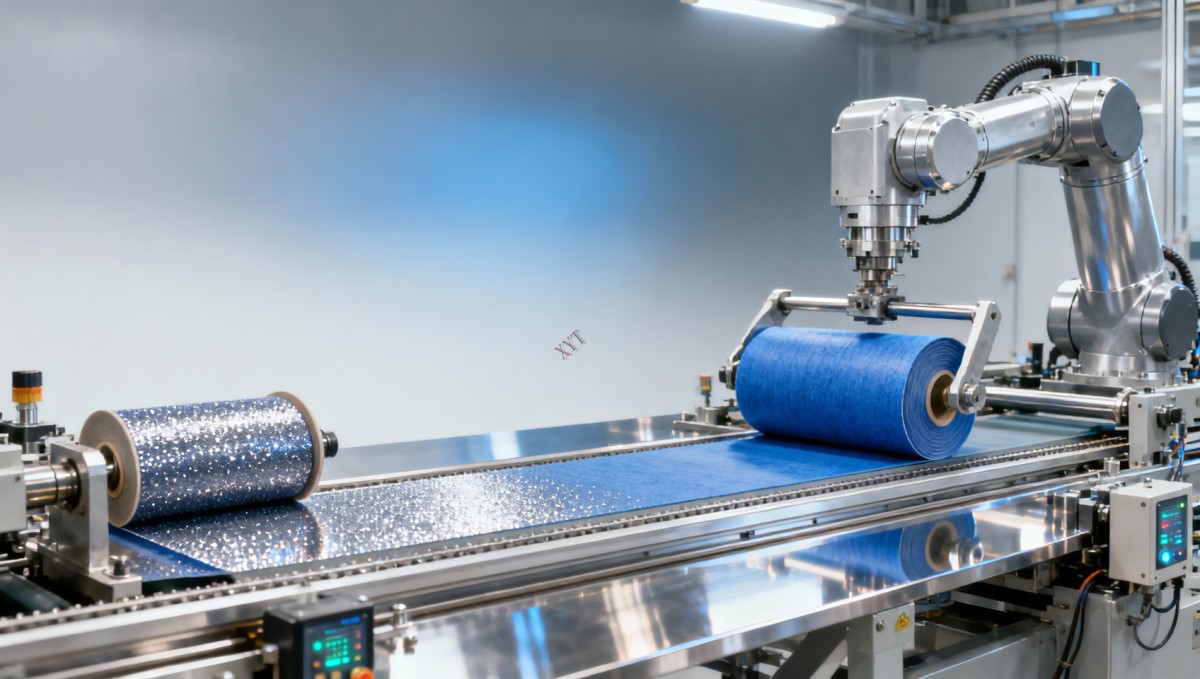
Lapping film degradation occurs gradually as abrasive particles wear down and the film backing loses its stability under continuous mechanical pressure and heat exposure. In MMC (metal matrix composite) polishing, even a minimal loss of abrasive sharpness—around 10–20%—can compromise uniform material removal. As a result, surface roughness values may rise from Ra 0.05µm to 0.15µm, exceeding the tolerance limits for optical or electronic components.
Operators often overlook early signs such as uneven film coloration or slight dullness on workpiece edges. Typically, the average life cycle of a high-quality lapping film is between 300 and 600 components per roll, depending on grit size and substrate hardness. When used in fiber-optic connector polishing, films with finer grits (below 1µm) may require replacement after 100–200 connectors.
Material fatigue of polyester backings is another key factor. Continuous tension over 10–12 hours in an automated polishing system accelerates film elongation and adhesive degradation, leading to slippage and pattern misalignment. These issues not only slow production but also increase product rejection rates by up to 25% in batch testing.
Modern production lines using Polishing Film Tapes and Rolls are precision-engineered abrasives designed for continuous surface finishing mitigate such problems through uniform coating technologies, PSA backing consistency, and grit calibration from 0.1µm to 80µm, ensuring predictable wear curves and extended usage intervals.
Key Signs Your Lapping Film Needs Replacement
Determining the optimal replacement time for lapping film involves monitoring physical, operational, and output-related indicators. In most cases, technicians rely on three primary indicators—visual inspection, performance trend analysis, and process noise—each offering measurable criteria within a 7–10 day usage cycle.
1. Decline in Polishing Efficiency: A consistent 10–15% increase in polishing time or torque after 200–300 cycles signals abrasive dulling. Systems calibrated at constant RPM will show gradual rise in current draw, suggesting higher friction and reduced cut rate.
2. Visible Surface Imperfections: Scratches wider than 2µm or micro-pits observed under 400× inspection imply contaminated or worn-out film grains. Optical interference patterns may also appear inconsistent across connector surfaces, affecting return loss beyond -55 dB in fiber terminations.
3. Uneven Film Motion and Backing Damage: Any curling edges, adhesive residue, or deformation exceeding 0.3mm on belts or tapes indicate that film tension has exceeded tolerance. For high-precision MMC operations, mechanical drift greater than ±0.5mm reduces repeatability and final geometry accuracy.
Table: Common Indicators and Replacement Recommendations
The following table summarizes the measurable conditions indicating when replacement is advised for MMC lapping and fiber-optic applications.
Interpreting this data helps maintenance teams synchronize film changeover with production planning, avoiding sudden downtime. When implemented properly, total tool replacement rates can be reduced by nearly 20% per quarter while maintaining dimensional repeatability within ±0.01mm.
Technical and Material Considerations
Each grit and material composition of lapping film reacts differently under MMC conditions. Diamond films deliver superior hardness for metal composites but may show faster clogging over 800–1000 cycles if coolant management is inadequate. In contrast, silicon carbide or aluminum oxide versions keep better performance consistency in moderate-load polishing systems rated 1.5–2.5 kW.
Film thickness, typically between 50µm and 125µm polyester backings, defines rigidity and flexibility ratio (3:2 standard for vertical systems). Backing adhesives like PSA layers should retain cohesion at 60–80°C continuous use without deformation. Deviations beyond ±5°C can drive premature delamination or joint failure in reel-based machinery operating continuously for over 8 hours.
Advanced products such as Polishing Film Tapes and Rolls are precision-engineered abrasives designed for continuous surface finishing address these technical demands through micron-graded diamond, cerium oxide or silicon dioxide abrasive particles, uniform thickness coating, and compatibility with automatic tape feed systems. Standard grit availability from 0.1µm to 80µm supports applications across automotive, electronics, and optical industries.
A comparison of selected technical parameters relevant to MMC users is outlined below.
Selecting proper grit and backing allows performance optimization for both rough and final polish stages, enhancing productivity by 15–25% depending on the application scale and automation level used.
Maintenance and Replacement Strategy
An effective replacement strategy integrates predictive maintenance and cycle-tracking systems. Modern MMC polishing lines use sensor-based monitoring to analyze cutting torque, surface reflectivity, and film drag force. Setting a threshold variation of ±5% across these metrics helps identify early deterioration before output quality declines.
Recommended replacement intervals typically range between 7 and 14 operational days depending on batch volume. Smaller manual systems handling 20–40 parts per day may operate up to two weeks on one film set, while continuous robotic systems at 100–150 parts/hour may require daily inspection and scheduled replacement within 24-hour cycles.
To improve efficiency, technicians can implement a four-step inspection protocol:
- Visual check every shift to identify scratches, color variation, or edge lift.
- Cycle logging after each batch of 50–100 workpieces for trend tracking.
- Surface measurement using profilometers within ±0.02µm accuracy.
- Routine calibration of tension rollers every 7–10 production cycles to maintain film alignment.
Adopting this structured workflow helps lower changeover waste by approximately 10–12% and maintains consistent output conformity for downstream inspection, reducing QA rejection scores by about 15% annually.
FAQ: Common Questions About MMC Lapping Film Replacement
How often should lapping film be replaced in MMC polishing?
Under standard operating conditions—temperature between 25°C and 50°C and moderate pressure (3–5 N/cm²)—lapping film should be replaced every 300–600 workpieces. However, in high-precision optical finishing, replacement may be required every 200 cycles to ensure consistent micro-surface uniformity.
What factors accelerate lapping film wear?
Improper cleaning, excessive friction, and poor coolant lubrication significantly shorten film life. Contaminant buildup thicker than 5µm can block abrasive interfaces, doubling process time. Regular cleaning every 3–4 hours of operation is recommended.
Can different grit sizes be combined during one polishing process?
Yes, sequential grit progression from 30µm to 0.1µm supports multi-stage finishing. The coarser grits handle heavy material removal, while fine grits ensure mirror-like surfaces. XYT’s range covers 0.1µm–80µm granularity for this exact purpose.
Are there visible indicators of adhesive or backing failure?
Yes, curling edges or delamination marks larger than 2mm along tension rollers signify increased temperature stress or overuse. Replacement should occur immediately to avoid film slipping and machining defects.
Why Choose XYT for Your Precision Lapping Film Needs
XYT combines proprietary coating systems, fully automated inspection lines, and Class-1000 cleanroom production to ensure every roll meets stringent international requirements. Our facility’s 12,000 m² plant operates under precise humidity control (40–60%) and employs inline vision inspection ensuring defect-free coating consistency across lengths up to 100m per roll.
For clients in fiber optics, electronics, and automobile micro-motor manufacturing, XYT provides tailored grit selection, roll width options between 1mm–350mm, and customized core sizes compatible with 1" and 3" standard spindles. We also offer quick sample dispatch within 3–5 working days and batch delivery cycles of 2–4 weeks globally.
By partnering with us, buyers gain access to technical consultation, application testing, and long-term supply stability supported by RTO exhaust systems and environmental compliance. Our engineers collaborate closely with project managers and quality control professionals to validate polishing outcomes under ASTM and ISO guidelines.
Contact our engineering team to confirm configuration parameters, verify material compatibility, or request customized lapping film solutions for MMC polishing. Together, we can extend your process reliability, reduce lifecycle costs, and achieve exceptional micro-surface precision.
Awesome! Share to:
Related Posts
- ◉ What technical support should I expect from a lapping film vendor?
- ◉ How to maintain batch-to-batch consistency in connector polishing?
- ◉ Is dry polishing better than wet for MTP connector finishing?
- ◉ What waste disposal requirements apply to polishing slurry in 2026?
- ◉ How to scale a polishing process from prototype to mass production?
Get in Touch
*We respect your confidentiality and all information are protected.