
Updated Aluminum Oxide Lapping Film 2026 Series Datasheets: Advancing Precision in Surface Finishing
Stay ahead in precision surface finishing with XYT’s latest Aluminum Oxide Lapping Film 2026 series technical datasheets. Designed for engineers, technicians, and procurement professionals, these updated resources provide detailed insights into performance, material specifications, and application compatibility. Explore how our advanced diamond lapping film, silicon carbide lapping film, TMT lapping film, MT lapping film, and cerium oxide lapping film solutions deliver consistent quality and efficiency in demanding polishing environments.
The update of the Aluminum Oxide Lapping Film 2026 series datasheets marks a significant leap forward in how manufacturers and engineers engage with key surface finishing materials. Whether integrated into fiber optic connectors, automotive sensors, or aerospace components, precision polishing has become an essential factor in achieving reliable component interfaces and high surface uniformity.
In the electrical equipment and components industry, aluminum oxide abrasive films have gained notable recognition for their balance between abrasive strength, cost efficiency, and material stability. The 2026 series, supported by XYT’s proprietary coating technologies and strict process control, offers an optimized particle distribution and film consistency, substantially improving dimensional accuracy and durability.
1. Technical Highlights of the 2026 Series Aluminum Oxide Lapping Film
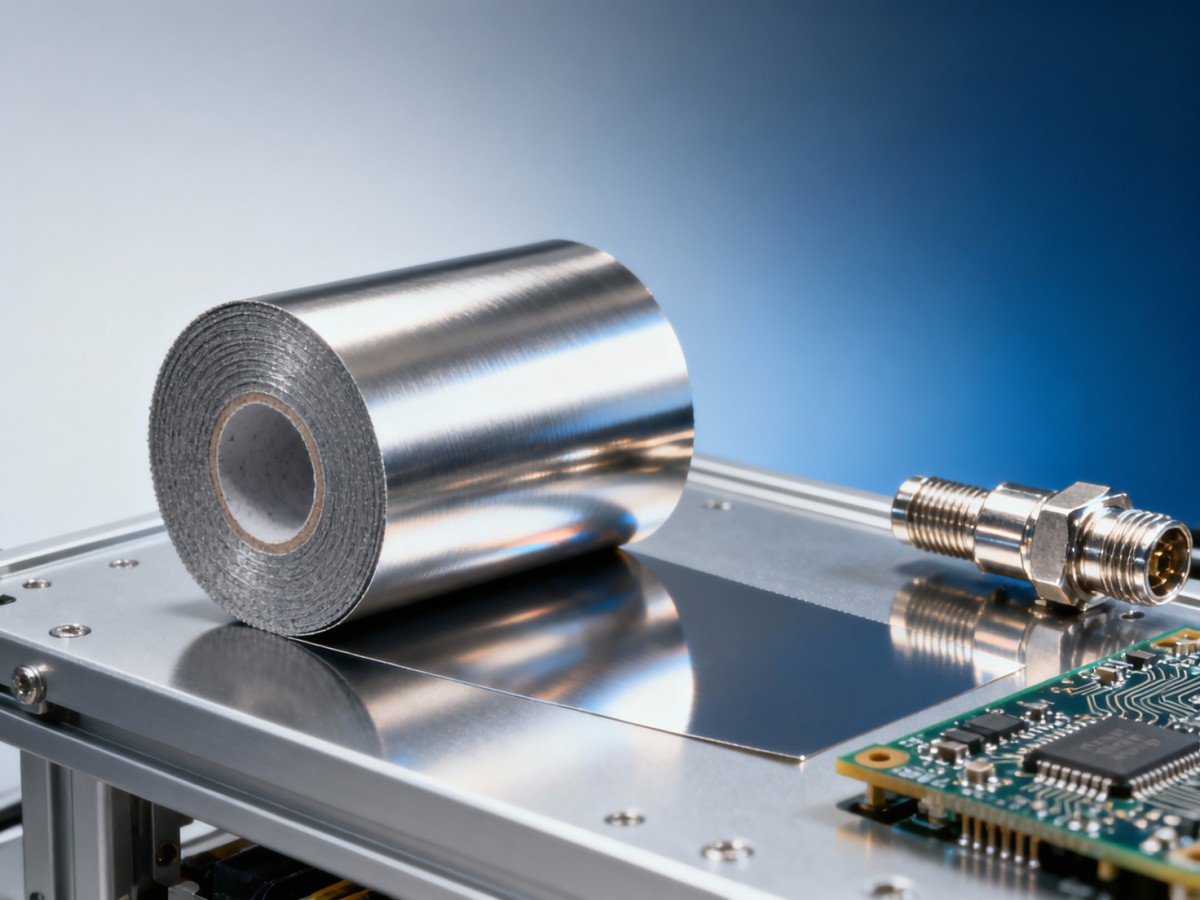
The Aluminum Oxide Lapping Film 2026 series represents a refined formulation that focuses on achieving higher repeatability and lower defect ratios in precision finishing. The abrasive grains are graded between 0.05 µm and 30 µm, enabling multiple stage polishing from pre-grind to mirror-finishing operations.
The film base in the 2026 series is engineered from polymeric polyester with an improved tensile strength of 150 MPa to 200 MPa, ensuring dimensional stability during automated polishing cycles. The coating uniformity deviation is maintained within ±3%, an improvement of nearly 20% compared to previous-generation models.
The film displays exceptional heat resistance between 60°C and 130°C, suitable for continuous operation under high-speed polishing machines. In addition, an anti-static layer helps reduce debris adhesion, decreasing manual cleaning requirements by approximately 40% in laboratory testing.
These characteristics make the 2026 series not only efficient for fine electrical component finishing but also suitable for optical fiber end-face polishing, semiconductor wafer edge finishing, and HDD head lapping.
Key Parameters Overview
The following table summarizes the most relevant performance metrics of the 2026 Aluminum Oxide Lapping Film.
Analyzing the table, users will observe that these specifications reflect high dimensional consistency, improving productivity in fully automated polishing lines and guaranteeing repeatable output even under continuous 24-hour operations. The low deviation values confirm stability against mechanical stretching and temperature shifts—key parameters for quality-sensitive sectors like optics and precision sensors.
2. Industrial Application Scenarios in Electrical Equipment Manufacturing
Electrical and electronic equipment manufacturers highly depend on micro-level surface integrity to ensure signal transmission and mechanical stability. The 2026 Aluminum Oxide Lapping Film integrates smoothly into fabrication environments where the control of connector end face roughness within 0.01 µm to 0.03 µm is required.
In motor stator manufacturing, for example, the film facilitates polishing of contact points, reducing surface resistance by up to 15%, which in turn optimizes power efficiency. The film’s versatility across both metallic and composite surfaces ensures compatibility with components ranging from stainless steel contacts to copper bushings.
Additionally, it finds extensive application in the aerospace and automotive sectors where tolerance control within ±0.005 mm plays a critical role. In these contexts, the 2026 film enables uniform abrasion across large-area surfaces while maintaining edge sharpness for precision assembly parts.
Its electrostatic neutral property makes it especially suitable for environments requiring ESD protection, such as circuit substrate finishing or electronic housing parts. Furthermore, engineers in fiber optics manufacturing utilize the film during multi-stage connector preparation, where 3 to 6 sequential polishing steps are needed before testing final insertion loss below 0.2 dB.
Typical Integration Workflows
Common polishing setups that leverage the 2026 series include both manual and fully automated processes:
- Stage 1: Pre-grind using 15 µm film for surface leveling.
- Stage 2: Transition polish with 5 µm film reaching sub-micron uniformity.
- Stage 3: Final mirror finishing using 0.3 µm or finer film for optical-grade clarity.
- Stage 4: Cleaning and dimensional validation with precision metrology systems.
This 4-stage process structure enhances production throughput by up to 25%, while also lowering reworking frequency and wastage. Engineers can easily adapt the sequence to automated production lines for electrical devices, where consistent repeatability ensures compliance with IEC quality guidelines.
3. Comparison Between XYT 2026 Series and Alternative Polishing Films
When evaluating surface finishing materials, it is crucial to distinguish between the mechanical behavior and abrasive characteristics of different film types. Below is a comparative overview between the Aluminum Oxide 2026 series and other common materials such as Diamond, Silicon Carbide, and Cerium Oxide films.
Compared to alternatives, the 2026 Aluminum Oxide Lapping Film offers the greatest cost-to-performance ratio for industries demanding high repeatability and low maintenance cycles. While Diamond films excel in ultra-hard materials, Aluminum Oxide achieves adequate finish levels with moderate pressure and less wear on machinery, supporting equipment longevity by around 15% in multi-shift operations.
Moreover, its performance stability across environmental conditions (18°C–28°C ambient range, 50%–75% relative humidity) ensures compatibility with both tropical and temperate manufacturing locations, an important factor for global distributors and system integrators.
4. Procurement and Evaluation Guidelines for Technical Teams
For procurement professionals and technical evaluators, understanding the interplay between grit size, backing quality, and supplier consistency is essential. XYT’s Aluminum Oxide 2026 datasheets include verification data on particle shape analysis and coating uniformity measured through automated optical inspection systems accredited under ISO 9001.
Decision-makers can evaluate the film using four practical indicators:
- Surface Roughness Target: Match film grit within ±0.05 µm to final Ra requirements.
- Process Throughput: Verify film lifetime measured in meters of polish—typically 25–40 m per roll in continuous use.
- Equipment Compatibility: Confirm film fits standard 127 mm discs or 35 mm reels depending on system.
- Supply Chain Reliability: Assess lead time averages of 7–12 days from order to delivery for custom grit configurations.
These parameters enable buyers to align material selection with cost-per-unit performance metrics and maintenance intervals, reducing annual operating costs by approximately 10–12% in most precision finishing plants.
5. Maintenance, Storage, and Quality Control Insights
Proper handling of lapping films can significantly extend usability and consistency. For the 2026 series, XYT recommends maintaining airflow-controlled storage environments between 15°C and 25°C and humidity under 65%. Rolls should remain sealed in anti-static pouches when not in use to prevent particulate contamination.
Quality inspection steps typically include lot-based thickness verification (±2 µm allowed deviation), visual assessment under 1000 lux illumination, and adhesion testing using a 180° peel strength of at least 20 N/25 mm. These controls assure performance alignment with both ASTM and JIS polishing standards.
From a production maintenance viewpoint, operators should clean backing plates every 5 hours of cumulative use, replacing films once surface transparency changes by 30% due to particle wear. Adhering to these maintenance cycles reduces polishing inconsistency below 2% across batches.
Moreover, integrating digital inspection data directly from XYT’s datasheet QR-access platform allows traceability of each production lot for over 12 months, assisting both OEM quality teams and external auditors in compliance assessments.
6. Frequently Asked Questions (FAQ)
How does the 2026 series differ from prior versions?
The 2026 series integrates improved resin-bond technology and uniform coating control, winning around 18% higher film resilience during high-load polishing. Its datasheets detail multi-layer crosslinking chemistry which reduces abrasive flaking and enables smoother material removal paths.
What are the minimum order quantities (MOQ) and standard packing formats?
Typical MOQ begins at 50 rolls for standard grit sizes and 100 rolls for customized non-listed grits. Standard packing utilizes sealed aluminum foil composite bags, with each carton containing 10–12 rolls depending on film width (typically 100 mm or 200 mm reels).
Can the Aluminum Oxide Lapping Film 2026 be combined with diamond or silicon carbide films in one process?
Yes. It is often used as an intermediate-stage film following coarse diamond lapping to achieve smoother transition abrasions before the final finish. Many optical component processes combine 15 µm diamond, 3 µm aluminum oxide, and 0.02 µm cerium oxide stages for balanced microtexture control.
What documentation is included in the updated datasheet package?
The full datasheet set includes six sections: material composition, coating properties, grit distribution maps, adhesion characteristics, operational recommendations, and environmental compliance certifications (ROHS, REACH, ISO). Each section is validated with statistical charts capturing over 500 test samplings per batch.
Conclusion and Next Steps
The updated Aluminum Oxide Lapping Film 2026 series reinforces XYT’s commitment to advancing high-precision abrasive solutions tailored for the electrical equipment and surface finishing industries. Through a balanced combination of improved thermal stability, precise grit uniformity, and optimized cost efficiency, it offers quantifiable advantages for engineering, quality assurance, and procurement teams alike.
Engineers can depend on the film for consistent surface finish control at micrometer and nanometer scales, while decision-makers gain confidence in predictable lifecycle costs, streamlined logistic support, and verified global compatibility.
Download the newly updated technical datasheets today to access full parameter insights and discover how XYT’s one-stop polishing solutions—including diamond, silicon carbide, cerium oxide, and specialized liquid compounds—help you achieve higher productivity and quality assurance in every polishing task. Contact XYT’s technical team to request customized samples or to discuss integration with your existing production systems for optimal results.
Awesome! Share to:
Related Posts
- ◉ China Tightens Abrasive Exports: Carbon Footprint Declarations Required for US and EU Shipments from August 15
- ◉ EU REACH Rules for Nanoparticle Silica Take Effect August 15
- ◉ When Is Cerium Oxide Film Used for Connector End-Face Finish?
- ◉ Diamond vs. Silicon Carbide Lapping Film for Connectors
- ◉ How Should MTP Polishing Parameters Be Tuned?
Get in Touch
*We respect your confidentiality and all information are protected.