
NEWS
Fast defect correction is becoming a higher-value capability
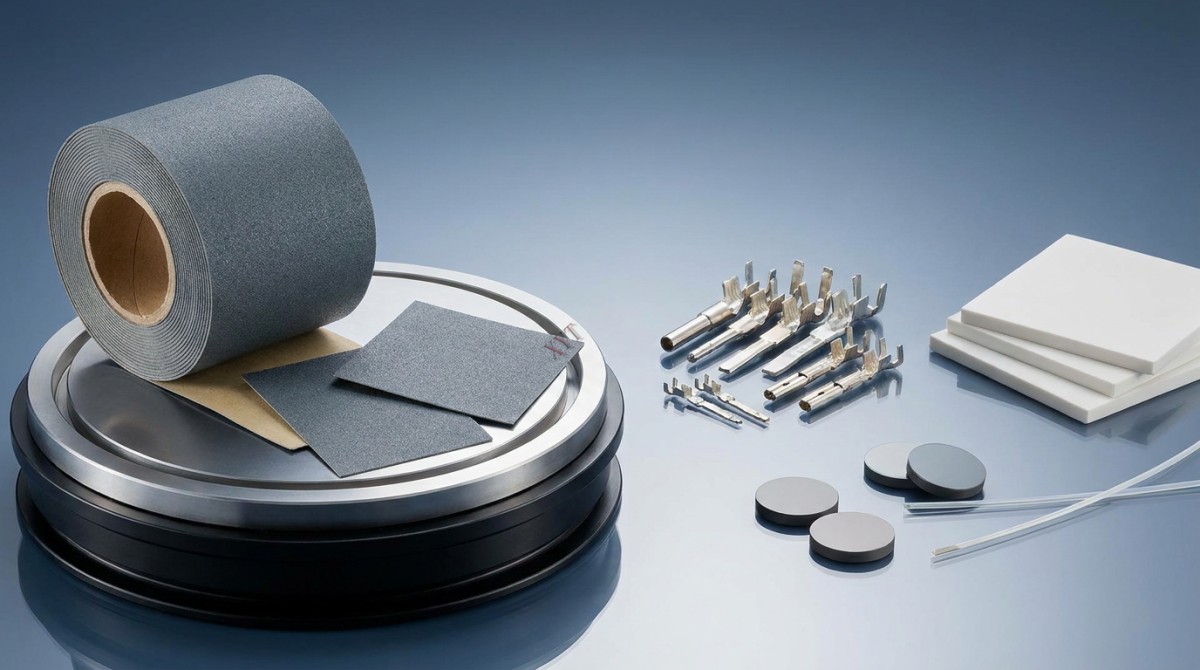
In electrical equipment service work, surface recovery is no longer a minor finishing step.
It now affects uptime, heat behavior, insulation reliability, optical alignment, and long-term component stability.
That shift is why silicon carbide lapping film is receiving more practical attention across repair and precision rework operations.
The appeal is simple.
When scratches, handling marks, coating residue, or local surface damage appear, teams need removal speed without losing dimensional control.
Abrasive aggression alone is not enough.
Consistency matters more, especially where electrical contact quality or optical transmission performance can shift after rework.
From recent field requirements, the stronger signal is not only faster repair.
It is faster repair with predictable finish quality across repeated maintenance cycles.
That is where silicon carbide lapping film fits well.
Its cutting action is sharp, stable, and useful for rapid defect removal on many hard surfaces used in electrical and related precision assemblies.
At the same time, it can be integrated into controlled finishing sequences rather than treated as a rough emergency tool.
This change in positioning matters.
More maintenance environments now expect a rework material to remove defects quickly, support documentation, and align with broader process stability goals.
In that context, silicon carbide lapping film is less a consumable detail and more a process control component.
XYT has been part of this shift through long-term work in premium lapping film and precision polishing systems.
Its background matters because stable repair outcomes depend heavily on coating uniformity, abrasive grading, backing strength, and inspection discipline.
Those production variables are often invisible in use, yet they determine whether field results remain repeatable.
As electrical equipment grows more compact and more performance-sensitive, the tolerance for uncontrolled defect correction keeps narrowing.
That is the broader reason this material discussion has become more relevant now than it looked a few years ago.
Why the need for silicon carbide lapping film is becoming more visible
Several practical changes are pushing defect-removal materials into sharper focus.
They come from equipment design, service expectations, and stricter quality economics.
Miniaturization is increasing the cost of small surface defects
Electrical equipment parts are getting smaller, denser, and more integrated.
A shallow scratch or local burr can now influence contact pressure, sealing behavior, signal transmission, or friction behavior more than before.
In some assemblies, visible marks once judged acceptable now create measurable performance drift.
That raises the value of a silicon carbide lapping film process that can remove damage fast without introducing uncontrolled secondary defects.
Downtime costs are pushing repair windows shorter
Maintenance schedules are tighter.
Shutdown periods in electrical systems, optical communication hardware, and precision electromechanical units are increasingly compressed.
That changes finishing priorities.
Materials that cut predictably in fewer passes gain an advantage over slower alternatives requiring frequent correction.
Silicon carbide lapping film is often selected because it balances strong defect-removal efficiency with manageable process control.
Rework is being measured more like production
A notable change is how after-sales and service rework are evaluated.
They are no longer seen as flexible craft zones.
They are being asked to deliver traceable consistency closer to factory standards.
That means abrasive films must perform reliably from batch to batch.
Random variation in cut rate, backing stability, or surface finish is more costly than it used to be.
Cross-industry knowledge is changing expectations
Lessons from fiber optics, semiconductors, and precision optics are influencing electrical equipment finishing standards.
These sectors have long treated surface quality as a core performance variable.
Now similar thinking is spreading into connectors, insulated components, sensor packages, and compact drive systems.
As a result, silicon carbide lapping film is being judged not only by removal speed but by finish predictability and process compatibility.
The wider point is clear.
The market is not simply using more abrasives.
It is becoming more selective about which abrasive behavior supports modern repair quality goals.
What makes silicon carbide lapping film a practical answer for fast defect removal
Not every abrasive film is suited to quick correction in precision electrical applications.
The value of silicon carbide lapping film comes from a specific combination of cutting behavior and controllability.
Sharp abrasive action reduces time spent on primary damage
Silicon carbide is known for its aggressive cutting profile.
That makes it effective for removing scratches, handling marks, oxide-related traces, and processing residue.
In defect-removal work, early-stage time often determines total repair time.
A fast-cutting film reduces that first bottleneck.
Film format supports more stable pressure and motion
Loose abrasive systems can perform well, but they introduce more process variability.
A lapping film format keeps abrasive particles in a controlled layer.
That helps maintain uniform contact under manual or machine-assisted use.
For defect correction, stable contact is often the difference between restoring a surface and reshaping it unintentionally.
Predictable scratch patterns simplify follow-up polishing
Fast removal alone does not complete the job.
The next stage must be able to refine the surface efficiently.
When a silicon carbide lapping film produces a consistent scratch profile, downstream steps become easier to standardize.
That matters in operations where one repair route may serve multiple component types.
It fits both urgent repair and structured process windows
One useful characteristic is versatility.
Silicon carbide lapping film can be used in rapid correction tasks, but it also works within defined grit sequences.
That allows teams to move from emergency use toward documented rework paths.
This shift from improvisation to controlled recovery is becoming more important across electrical equipment support environments.
- Efficient removal of visible scratches and local defects
- Better consistency than many uncontrolled abrasive methods
- Cleaner transition into finer polishing stages
- Suitable for both flat and shaped precision contact areas
- Useful in maintenance, refurbishment, and selective finishing correction
This is also why performance cannot be judged only by grit label.
Coating distribution, backing rigidity, abrasive retention, and manufacturing quality all shape real-world results.
That is one reason experienced users increasingly pay attention to supplier process capability rather than comparing abrasive type alone.
The bigger story is process stability, not just material hardness
A common mistake is to discuss silicon carbide lapping film only in terms of hardness and cut rate.
Those factors matter, but the more decisive issue is process stability under real maintenance conditions.
Field environments rarely offer ideal laboratory repeatability.
Pressure varies slightly.
Surface conditions differ.
Damage depth is inconsistent.
Operator habits are never perfectly identical.
In these conditions, a high-quality film can absorb variation better than a marginal one.
Uniform abrasive distribution changes the outcome
When abrasive particles are unevenly distributed, local cutting pressure rises unpredictably.
That can create fresh scratches while removing the original ones.
It also increases rework loops.
Uniform coating technology therefore has direct process value, not just manufacturing prestige.
Backing durability protects geometry during repeated use
Electrical and optical components often have surfaces that cannot tolerate edge rounding or shape drift.
A durable polyester backing helps the film remain stable under working pressure.
That reduces the risk of unwanted compliance changes during correction.
In practice, this can be as important as abrasive sharpness.
Inspection discipline upstream affects repair confidence downstream
Users often notice only the film in hand.
But in-line inspection and quality control at the coating stage are what keep the film predictable later.
This is one area where established manufacturing infrastructure matters.
XYT’s investment in precision coating lines, Class-1000 cleanrooms, automated control, and in-line inspection reflects this broader reality.
For the user, the benefit is practical.
Less batch variation means less process uncertainty during time-sensitive repair work.
The market is slowly becoming more aware of that connection.
As surface finishing becomes a quality variable rather than a closing step, manufacturing discipline behind the abrasive matters more.
Where the impact shows up across electrical equipment applications
The usefulness of silicon carbide lapping film becomes clearer when examined by application, not by theory alone.
Different electrical equipment categories experience different benefits and constraints.
Connector and terminal surface recovery
Contact surfaces can pick up wear marks, contamination traces, or assembly damage.
In these cases, fast defect removal helps restore contact integrity and reduce the risk of unstable electrical behavior.
The main caution is preserving geometry and plating integrity.
That is why controlled silicon carbide lapping film use is preferred over overly aggressive freehand correction.
Insulating ceramics and technical substrates
Ceramic components used in electrical equipment can develop handling scratches or edge-area damage.
Here, silicon carbide lapping film is valued for its ability to cut hard materials efficiently.
It can help recover functional surfaces before defects expand into assembly or dielectric reliability issues.
Fiber-related electrical communication hardware
The boundary between electrical equipment and optical communication hardware is increasingly blurred.
Power systems, data infrastructure, and control networks all depend on precision optical links.
In these environments, defect removal must support low insertion loss and stable return loss, not just visual cleanliness.
That is where structured film sequences become essential.
Motor and micro-drive components
Micro motors and precision rotating parts can be sensitive to surface marks that affect friction, balance, or mating quality.
In refurbishment or selective correction, silicon carbide lapping film can shorten the path from defect detection to functional recovery.
The gain is not only surface appearance.
It is a more stable restoration of working behavior.
Optical windows, sensors, and hybrid modules
Many electrical systems now include sensors, protective windows, or hybrid photonic elements.
A small defect on these surfaces can impair measurement accuracy or transmission efficiency.
This expands the role of silicon carbide lapping film from mechanical correction into performance-critical rework support.
The same abrasive category therefore serves different business goals.
Sometimes the goal is recovery speed.
Sometimes it is optical performance retention.
Sometimes it is restoring surface geometry before the defect turns into a larger asset loss.
A notable shift: service teams now expect finer finish control after rough removal
One of the clearest recent changes is the expectation placed on the stages after initial defect removal.
A few years ago, rapid scratch elimination often ended the discussion.
Now it rarely does.
Users increasingly want a silicon carbide lapping film step to integrate smoothly into a broader finishing route.
This is especially true where surfaces interact with optical paths, sealing edges, precision contacts, or low-friction interfaces.
The rework chain is becoming more sequential
More repair paths are being documented as staged sequences.
A coarse or medium silicon carbide lapping film step removes the primary defect.
Then finer films or polishing media refine the scratch pattern.
The advantage is lower dependence on operator guesswork.
Mixed abrasive strategies are becoming normal
No single abrasive material covers every requirement perfectly.
That is why many advanced processes combine silicon carbide with diamond, alumina, ceria, or silica in later steps.
The trend is not a replacement of one by another.
It is smarter stage allocation based on what each material does best.
XYT’s broader abrasive portfolio aligns with this reality because modern finishing routes increasingly depend on compatible multi-material process design.
Process windows are becoming easier to define
The more standardized the film and equipment behavior, the easier it becomes to define operating windows.
For example, consistent contact pressure, platen speed, and grit progression help avoid under-correction or surface overworking.
That matters when repair work must be auditable rather than purely experiential.
In optical and photonic finishing, this staged logic is already well established.
A practical reference can be seen in Polishing Films for Precision Optical & Photonic Applications | XYT Lapping Film.
Its application range spans fiber optics, photonics, semiconductors, optics, connector end faces, PICs, lasers, lenses, wafer surfaces, and fiber arrays.
The process data are equally useful as a reference mindset.
A grit route from 30 to 0.5 µm, contact pressure around 1–6 N, and platen speed around 30–120 rpm show how controlled progression supports precision outcomes.
Even outside pure optics, that discipline is influencing how electrical equipment rework is now structured.
Why supplier capability is starting to matter more than before
There is a broader market shift behind material selection.
Users are paying closer attention to who made the film and how it was made.
That is not branding for its own sake.
It reflects the rising cost of inconsistency in high-precision rework.
Production scale now needs to support precision, not dilute it
Larger manufacturing capacity is useful only if precision is maintained across volume.
In abrasive films, high output without coating stability creates more field variation.
That is why facility quality has become a meaningful signal.
XYT’s 125-acre site, 12,000-square-meter factory footprint, high-standard slitting and storage centers, and environmental control systems suggest an industrial setup built for repeatability.
R&D is becoming more relevant to maintenance materials
A second shift is the rising importance of formulation and coating development.
As maintenance needs diversify, films must perform across more materials and more defect conditions.
That requires more than stable production.
It requires materials engineering.
Patented formulations and proprietary manufacturing technologies become valuable when they reduce practical uncertainty in the field.
Global use creates stronger proof than isolated claims
Another useful indicator is market validation across many industries and regions.
Products trusted in over 85 countries and regions have likely passed through a wider range of operating environments.
That does not replace technical verification.
But it does suggest better maturity in product stability, service response, and application knowledge.
The underlying change is important.
Surface finishing consumables are increasingly assessed like engineered process inputs, not generic workshop supplies.
That mindset shift will likely continue.
Where silicon carbide lapping film works best, and where caution is still needed
The growing interest in silicon carbide lapping film does not mean it is ideal in every situation.
Its strength is speed and effective defect cutting.
Its limitation is the need for disciplined control when surfaces are highly sensitive.
Best fit conditions
- Defects are visible and need rapid material removal
- Substrates are hard enough to benefit from sharp abrasive action
- A follow-up refinement stage is available
- Process consistency matters more than improvised sanding speed
- Repair windows are short but finish quality still matters
Situations requiring tighter control
- Thin coatings that cannot tolerate aggressive removal
- Optical or sealing surfaces needing very low residual scratch depth
- Geometries vulnerable to edge roll-off
- Mixed-material assemblies with different removal behaviors
- Manual operations lacking pressure control discipline
This balanced view matters because the most successful finishing strategies are selective, not ideological.
Silicon carbide lapping film is highly useful when matched to its strengths.
Problems usually appear when users expect one abrasive stage to solve every surface requirement.
Current market practice is moving away from that assumption.
The next competitive difference may come from better process tuning, not new materials alone
It is tempting to think the next improvement will come from a breakthrough abrasive.
In many cases, the more immediate gains will come from process tuning around existing materials.
Silicon carbide lapping film still has room to deliver better results when used with more disciplined parameter control.
Pressure control is becoming a central variable
Too little pressure slows defect removal and extends repair time.
Too much pressure deepens scratch patterns and increases geometry risk.
More operations are therefore standardizing force ranges rather than leaving contact entirely to feel.
Motion consistency is receiving overdue attention
Uneven motion creates uneven removal.
That sounds obvious, but it remains a major hidden source of repair variation.
Whether using a platen or hand-guided fixture, repeatable motion paths are becoming part of serious quality control.
Consumable format is being chosen more strategically
Sheets, rolls, discs, and die-cut formats are not just packaging choices.
They shape handling, contact stability, changeover speed, and waste rates.
In higher-volume or more repeatable environments, format selection increasingly affects total process efficiency.
That is another reason the market is looking more closely at application-specific film design rather than generic abrasive supply.
Data feedback is slowly entering finishing decisions
A subtle but meaningful change is the use of inspection data to refine abrasive steps.
Surface microscopy, contact resistance, optical loss, and dimensional checks are being linked back to film choice and process sequence.
That feedback loop will likely make silicon carbide lapping film use more targeted and more efficient over time.
The result is a more mature finishing culture.
Instead of asking only which film cuts fastest, more teams are asking which process window restores function with the least variation.
What to watch if application requirements keep getting stricter
The trajectory points toward tighter tolerances, more mixed-function surfaces, and higher rework accountability.
That does not reduce the value of silicon carbide lapping film.
It makes correct use more important.
Watch for rising expectations around surface integrity
Visual improvement will not be enough in many future applications.
Residual sub-surface damage, micro-scratch direction, and local flatness may matter more than they do today.
This will increase the importance of matching removal stages with refinement stages carefully.
Watch for more convergence between electrical and optical finishing rules
As devices integrate sensing, communication, and control in smaller packages, finishing standards will cross traditional sector boundaries.
Practices once limited to fiber and photonics will influence broader electrical component rework.
That favors suppliers able to support both rough correction and fine surface engineering.
Watch for higher demand for technical support, not just consumables
The more complex the application, the more users need process guidance.
Advice on grit progression, pressure, platen speed, backing choice, and defect classification can save more time than switching brands repeatedly.
This is where suppliers with broad abrasive knowledge become more useful.
For instance, the same platform behind Polishing Films for Precision Optical & Photonic Applications | XYT Lapping Film reflects a wider industry direction.
Tightly graded abrasives, electrostatic coating, durable polyester backing, broad grit coverage, and application-specific formats are no longer niche preferences.
They are increasingly baseline requirements where precision and throughput must coexist.
A practical way forward for better defect-removal decisions
The most useful next step is not to treat silicon carbide lapping film as a universal answer.
It is to place it correctly within a controlled defect-removal strategy.
That approach fits where the market is already moving.
- Map which defect types truly benefit from fast silicon carbide cutting
- Define acceptable removal depth before correction starts
- Link each silicon carbide lapping film step to a follow-up refinement stage
- Standardize pressure, motion, and inspection points where possible
- Review film format choices based on handling and consistency, not habit alone
- Track whether repair speed gains are being lost later through finish instability
- Compare supplier process capability, not just nominal grit offerings
The broader conclusion is straightforward.
Surface defect correction in electrical equipment is becoming more precision-driven, more time-sensitive, and more measurable.
In that environment, silicon carbide lapping film remains highly relevant because it answers a real operational need.
It removes defects quickly, supports stable process design, and fits the growing demand for repeatable recovery quality.
The main opportunity now is to use it with more intent.
That means watching application shifts, refining process windows, and choosing material partners with proven coating, inspection, and technical support depth.
The teams that do this well will not simply remove defects faster.
They will recover performance more reliably while protecting the service economics that matter most.
Awesome! Share to:
Related Posts
- ◉ What technical support should I expect from a lapping film vendor?
- ◉ How to maintain batch-to-batch consistency in connector polishing?
- ◉ Is dry polishing better than wet for MTP connector finishing?
- ◉ What waste disposal requirements apply to polishing slurry in 2026?
- ◉ How to scale a polishing process from prototype to mass production?
Get in Touch
*We respect your confidentiality and all information are protected.