
NEWS
Choosing the right diamond lapping film manufacturer in 2026 requires more than comparing prices. For business evaluators in the electrical equipment and supplies sector, key factors include production technology, material consistency, quality control, global delivery capability, and application expertise. This guide outlines the practical criteria that help you identify reliable suppliers, reduce sourcing risk, and support long-term performance in precision finishing operations.
In electrical equipment manufacturing, surface finishing is directly tied to connector reliability, optical transmission stability, insulation performance, heat dissipation efficiency, and component assembly precision. A supplier that cannot maintain consistent abrasive performance from batch to batch may create hidden variation across fiber optic ferrules, ceramic components, motor parts, metal shafts, precision molds, and electronic subassemblies.
For business evaluators, the real task is not only to find a qualified source, but to confirm whether a diamond lapping film manufacturer can support long-cycle procurement, technical validation, multi-site supply, and stable quality over 12 to 36 months. The strongest suppliers combine manufacturing depth, process control, responsive service, and application understanding across demanding industrial environments.
Why Manufacturer Evaluation Matters More in 2026
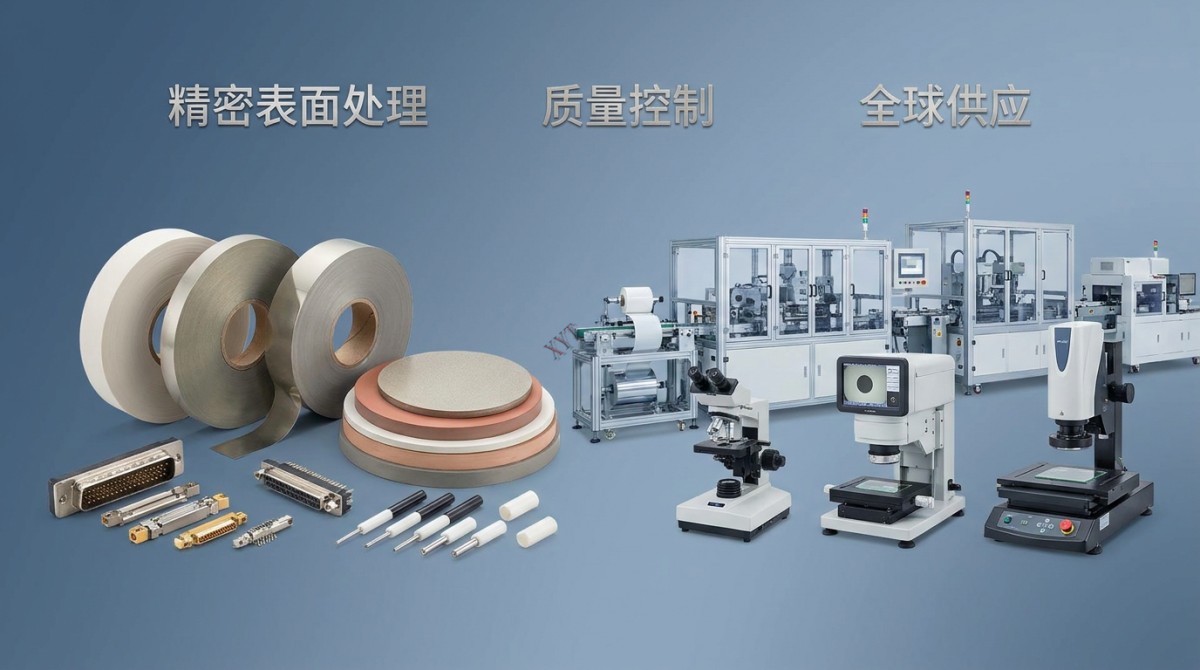
In 2026, procurement teams are facing tighter tolerance expectations, shorter lead-time targets, and more complex global sourcing decisions. Electrical equipment and supplies buyers increasingly need films that perform predictably at micron-level finishing stages, especially when end products must meet internal defect thresholds such as scratch control, flatness stability, or connector end-face quality.
A weak supplier may still offer an attractive quotation, yet fail under scale. Common failure points include inconsistent grit distribution, unstable adhesive backing, poor slitting accuracy, contamination in packaging, and delayed response when process issues emerge. Each one can increase rework rates by 3% to 8%, extend validation cycles by 2 to 6 weeks, or cause line interruptions during qualification.
The Purchasing Shift From Unit Price to Total Process Value
For precision finishing applications, the lowest unit price rarely produces the lowest total cost. Evaluators now compare at least 4 dimensions: abrasive consistency, usable life per sheet or disc, defect reduction, and support capability. If one film lasts 20% longer and lowers polishing variation, its total cost per qualified part may outperform a cheaper alternative.
This is especially true in electrical sectors using fiber optic components, ceramic ferrules, relay parts, micro motor shafts, sensor housings, and conductive substrates. In these applications, process repeatability often matters more than nominal consumable price, because the cost of rejected assemblies can be 5 to 30 times higher than the polishing media itself.
What Business Evaluators Need to Verify Early
- Whether the manufacturer controls coating, slitting, inspection, and packaging in-house
- Whether batch-to-batch variation is monitored with clear internal acceptance criteria
- Whether application engineers can support process transfer across 3 to 5 polishing steps
- Whether delivery capability is reliable for both trial quantities and recurring volume orders
- Whether the supplier understands electrical equipment finishing requirements, not only generic abrasives
The most reliable evaluation model treats a diamond lapping film manufacturer as a process partner rather than a commodity vendor. That shift improves sourcing decisions because polishing films influence yield, equipment uptime, operator consistency, and final component performance across the entire finishing workflow.
Core Technical Criteria for Assessing a Diamond Lapping Film Manufacturer
Technical capability should be the first deep review area. A diamond lapping film manufacturer serving electrical equipment applications must demonstrate control over abrasive selection, coating uniformity, backing stability, adhesive performance, and dimensional accuracy. These factors determine whether polishing can remain stable over repeated production cycles.
Abrasive Distribution and Particle Control
Diamond films are often selected because they cut hard materials efficiently and maintain finishing consistency on ceramics, glass, composites, and precision metals. However, performance depends on more than nominal grit size. Evaluators should ask how the manufacturer manages particle dispersion, coating density, and surface uniformity across each roll or sheet format.
In practical terms, uneven grit distribution can create localized scratching, poor removal uniformity, or unstable endpoint control. These issues become critical when processing ferrules, optical connectors, hard coatings, or flat metal parts where finishing tolerances may be measured in low microns and process windows are narrow.
Questions to Ask
- What coating methods are used to maintain abrasive distribution consistency?
- How is in-line inspection performed during production?
- What acceptance standards are applied to surface defects, grit agglomeration, or coating voids?
- How often are retained samples reviewed during recurring production?
Backing Film Stability and Dimensional Precision
Backing film stability matters because stretching, curling, or thickness inconsistency can affect contact pressure and material removal. A capable diamond lapping film manufacturer should be able to explain how backing materials are selected for flatness, tensile stability, and compatibility with wet or dry finishing processes.
For die-cut discs, narrow strips, or custom sheets, slitting and converting precision also matter. Tolerance control within practical industrial ranges, such as tight cutting repeatability and clean edges, supports automated use and reduces handling problems. Evaluators should also check whether packaging prevents moisture exposure and particulate contamination during storage and transit.
The table below summarizes technical checkpoints that buyers in electrical equipment and supplies should compare during supplier qualification. It can be used as a practical scorecard during RFQ, sample review, and factory audit discussions.
A supplier that can answer these points with specific process detail is generally more reliable than one relying on broad claims. For business evaluators, technical transparency is often an early indicator of future support quality and operational discipline.
Manufacturing Infrastructure and Process Control Signals
A strong diamond lapping film manufacturer should show evidence of robust production infrastructure rather than only trading capability. For procurement teams in electrical equipment and supplies, this distinction matters because true manufacturers usually provide better consistency, tighter process feedback, and more flexible technical adjustment during qualification.
Why Production Environment Matters
In precision abrasive manufacturing, environmental control influences contamination risk, coating uniformity, and product stability. Clean production areas are especially relevant when the lapping film will be used in optics, fiber communication, micro electronics, ceramic ferrules, and precision electrical connectors. A small amount of contamination can alter polishing results or create visible defects.
XYT, for example, operates a 125-acre facility with a 12,000-square-meter factory area, supported by precision coating lines, optical-grade Class-1000 cleanrooms, a dedicated R&D center, high-standard slitting and storage centers, and an RTO exhaust gas treatment system. For an evaluator, these details suggest a manufacturer built for controlled production rather than low-visibility outsourcing.
The Importance of In-House Process Ownership
When coating, formulation, converting, inspection, and storage are integrated under one system, problem resolution is usually faster. If a batch issue appears during line testing, the supplier can often review retained material, production records, and converting logs in 24 to 72 hours. A trading intermediary may need 1 to 2 additional weeks to gather comparable answers.
This matters in 2026 because sourcing delays can affect plant startup schedules, qualification plans, and customer delivery commitments. Manufacturers with automated control systems and in-line inspection are better positioned to reduce variation before shipment rather than relying heavily on end-of-line screening alone.
Factory Audit Signals Worth Checking
- Whether raw material entry, coating, curing, slitting, and packing follow a traceable flow
- Whether there is clear segregation between clean converting zones and general logistics areas
- Whether production records can be linked to lot numbers and shipment documents
- Whether storage conditions are controlled for temperature, humidity, and contamination exposure
- Whether maintenance intervals for critical coating and inspection equipment are documented
For business evaluators who cannot conduct a full on-site audit, a structured video audit and document review can still reveal much. Request a process map, facility images, converting examples, inspection screenshots, and a sample traceability record. If responses remain vague, the sourcing risk is usually higher than the price difference suggests.
How to Judge Quality Control Beyond Basic Claims
Quality control is often the most repeated phrase in supplier marketing, but evaluators need to separate procedures from proof. A credible diamond lapping film manufacturer should explain not just that inspections happen, but what is measured, when it is measured, what happens when material falls outside tolerance, and how recurring issues are prevented.
Three Levels of Quality Review
The most dependable suppliers usually manage quality at 3 levels: incoming raw material verification, in-process monitoring, and final release inspection. If even one stage is weak, defects may slip through. For example, coating control alone does not solve issues caused by unstable base film or contaminated packaging materials.
- Incoming checks confirm the consistency of backing films, abrasive materials, and adhesive components.
- In-process controls monitor coating behavior, visual defects, and converting precision during production.
- Final inspection validates shipment readiness, labeling accuracy, and packaging integrity.
Traceability as a Risk-Control Tool
Traceability is essential for business continuity. If an electrical connector manufacturer reports abnormal polishing marks after 6 weeks of use, the supplier should be able to trace the lot, identify the production date, review the inspection history, and compare retained samples. Without this system, root-cause analysis becomes slow and uncertain.
Ask whether each shipment can be linked to batch records, conversion records, and inspection outcomes. Also check how long records are stored. In many industrial purchasing environments, a practical minimum is 12 months, while long-cycle or export-oriented programs often prefer 24 months or more for documentation retention.
The following matrix helps evaluators distinguish between basic and advanced quality management when reviewing a diamond lapping film manufacturer.
When a manufacturer can explain quality controls in operational detail, evaluators gain more confidence in future volume supply. This is especially important where polishing media affect final inspection yield, optical performance, or downstream assembly reliability.
Application Expertise in Electrical Equipment and Supplies
Not every abrasive producer understands how finishing media perform inside electrical manufacturing lines. The right diamond lapping film manufacturer should know how abrasive type, grit sequence, backing format, lubricant choice, and machine settings interact in actual applications. That knowledge shortens validation time and reduces costly trial-and-error.
Key Use Cases That Require Technical Support
In the electrical equipment sector, lapping films may be used in fiber optic connector polishing, ferrule finishing, ceramic component preparation, shaft polishing for micro motors, precision metal deburring, and surface refinement for sensor or relay parts. Each use case places different demands on cut rate, finish quality, pressure stability, and consumable life.
A supplier with broad application coverage can often recommend a 3-step, 4-step, or 5-step polishing sequence depending on substrate hardness and target finish. This is more valuable than a generic product list, because real process optimization depends on sequence compatibility rather than single-item performance alone.
Why Material Breadth Strengthens Supplier Value
Diamond is essential for many hard-material finishing tasks, but electrical equipment buyers often need more than one abrasive system. A manufacturer that also supplies aluminum oxide, silicon carbide, cerium oxide, silicon dioxide, polishing liquids, lapping oils, pads, and precision polishing equipment can support broader process integration and easier line standardization.
For example, a qualification project may begin with diamond film for aggressive stock removal but later require ultra-fine finishing or final surface refinement using another abrasive family. In such cases, a one-stop supplier reduces coordination time, shortens sourcing cycles, and improves compatibility between consumables and equipment settings.
Example of Cross-Application Purchasing Logic
- Fiber optic finishing often prioritizes surface control, end-face quality, and repeatable sequence design
- Micro motor parts may prioritize burr removal, dimensional stability, and cycle-time efficiency
- Relay and connector components may require balanced cut rate and cosmetic consistency
- Optical or ceramic elements may demand very low contamination and fine final finish control
In some finishing programs, evaluators may also compare diamond products with ultra-fine alternatives for selected steps. For reference, suppliers that offer formats such as 1 µm PSA Aluminum Oxide Lapping Film Discs & Sheets | Ultra-Fine Polishing can be useful when process engineers need a finer finishing stage, pressure-sensitive adhesive mounting convenience, or a complementary material within a broader polishing sequence.
Delivery Capability, Export Readiness, and Supply Continuity
Even a technically strong diamond lapping film manufacturer can become a weak sourcing choice if delivery performance is unstable. In 2026, electrical equipment buyers often need dual-stage procurement support: fast sample response for testing within 7 to 15 days, followed by repeatable production supply over quarterly or annual purchase cycles.
What Delivery Capability Really Means
Delivery capability includes more than lead time. It also covers raw material planning, conversion capacity, packaging accuracy, export documentation handling, and the ability to ship to multiple regions without repeated confusion over labels, dimensions, or product configuration. Evaluators should ask how the supplier manages both standard and custom orders.
For example, sample orders may move quickly, but recurring supply could fail if the producer lacks stable scheduling or sufficient slitting capacity. Review whether the supplier can support monthly forecasts, blanket orders, or safety stock discussions. A manufacturer serving customers in more than 85 countries, as XYT does, often brings stronger familiarity with varied shipment requirements and cross-border coordination.
Red Flags in International Supply
- Lead times change significantly between sample stage and commercial stage.
- Custom die-cut or converted formats require unclear extra handling time.
- Packaging specifications are not confirmed in writing before shipment.
- Technical and sales communication are disconnected, causing order errors.
- There is no defined response window for quality claims or urgent replenishment.
For mission-critical electrical production lines, buyers should ask suppliers to define response timelines. A practical benchmark may include quotation response within 24 to 72 hours, sample recommendation within 3 to 5 working days, and complaint acknowledgment within 24 hours after receiving clear issue evidence. Suppliers that resist this level of clarity may create planning risk later.
Cost Evaluation: Looking Beyond the Quoted Price
Business evaluators should calculate total process cost instead of comparing only unit price per disc, sheet, or roll. A lower-cost abrasive that requires more frequent replacement, increases cycle time, or raises defect rates may produce a higher real cost per finished part. This is where a capable diamond lapping film manufacturer can create measurable value.
The Five Cost Layers to Compare
- Consumable price per unit
- Usable life under actual process conditions
- Yield impact on qualified parts
- Machine downtime during film changes or problem resolution
- Engineering time spent on revalidation or corrective action
Suppose Supplier A offers a film at a lower unit price, but operators must replace it every 180 parts instead of every 240 parts, and the defect rate rises by 2%. In medium-volume production, those differences can easily outweigh the initial savings. Evaluators should therefore request side-by-side trial data under controlled machine settings.
How to Structure a Realistic Trial
A proper comparison should use the same substrate, machine, lubricant, pressure condition, and polishing time window. Ideally, the trial should include at least 3 measurement points: beginning-of-life performance, mid-life stability, and end-of-life consistency. This approach reveals whether one product only performs well in short-run testing.
When reviewing trial results, do not focus only on average performance. Look for variation range, operator comments, residue behavior, mounting ease, and packaging usability. These practical factors often influence plant acceptance more than lab averages alone.
How to Evaluate R&D Strength and Product Development Support
A qualified diamond lapping film manufacturer should do more than repeat standard catalog items. In electrical equipment production, finishing requirements change as designs become smaller, harder, cleaner, and more performance-sensitive. Suppliers with genuine development capability are better prepared to support custom backing options, new polishing sequences, or improved lot stability over time.
Why R&D Matters for Procurement Teams
Procurement may not run the polishing process directly, but sourcing decisions affect future process flexibility. If a manufacturer has a functioning R&D center, pilot capability, and formulation control, the buyer gains access to engineering support when existing products need refinement. That reduces the risk of restarting supplier searches when production conditions change.
XYT emphasizes proprietary manufacturing technologies, patented formulations, automated control systems, and in-line inspection. Without overstating what any buyer should assume, these are meaningful indicators that the company invests in process development rather than operating only as a converter or reseller. Evaluators should still verify how those capabilities translate into customer-facing support.
Questions That Reveal Development Depth
- Can the supplier recommend a complete polishing sequence based on substrate and target result?
- Can backing, size, adhesive, or packaging be adjusted for different machine platforms?
- Can the supplier support pilot runs before full commercial launch?
- What is the usual timeline for evaluating a custom request: 2 weeks, 4 weeks, or longer?
- Who will handle technical communication after the first order is shipped?
A strong answer should show process understanding, not only catalog familiarity. For evaluators, the best sign is a supplier that can connect abrasive design decisions to actual production outcomes such as lower scratch incidence, more stable cycle time, or improved final inspection results.
A Practical Supplier Scoring Framework for Business Evaluators
To avoid subjective decisions, procurement teams should score each diamond lapping film manufacturer against weighted criteria. A structured framework helps align engineering, quality, purchasing, and operations. It also creates a documented selection rationale that is easier to defend during internal approval or supplier review meetings.
Recommended Weighting Model
A common approach is to allocate 25% to technical performance, 20% to quality systems, 20% to delivery and supply continuity, 15% to application support, 10% to commercial terms, and 10% to communication responsiveness. Teams may adjust the weighting, but technical and quality factors should usually represent at least 40% to 50% of the total score.
The scoring table below is designed for electrical equipment and supplies buyers evaluating both established and emerging suppliers.
Using a weighted framework reduces the risk of overvaluing price or underestimating service depth. It also helps evaluators compare suppliers at different maturity levels without losing focus on operational fit.
Common Mistakes When Selecting a Diamond Lapping Film Manufacturer
Many sourcing problems begin with avoidable evaluation mistakes. These mistakes usually happen when teams move too quickly from quotation to trial order, or when technical review and purchasing review are separated. In precision finishing, poor early assumptions can create months of downstream correction work.
Mistake 1: Assuming Nominal Grit Size Tells the Whole Story
Two products labeled with similar micron ratings may behave differently because coating density, backing stiffness, adhesive structure, and abrasive dispersion are not the same. Evaluators should therefore request real application samples rather than deciding from specification sheets alone.
Mistake 2: Treating Sample Success as Proof of Volume Stability
A favorable sample result is useful, but it does not automatically confirm long-term batch consistency. Always ask how commercial production is controlled, whether the sample came from standard production conditions, and how future lots will be matched. This is one of the most important steps when evaluating a diamond lapping film manufacturer.
Mistake 3: Ignoring Packaging and Storage Requirements
Precision abrasives can be affected by contamination, temperature, humidity, or poor handling. If the supplier cannot provide clear storage guidance, shelf-life expectations, or packaging protection details, product quality may decline before it reaches the line. This is especially critical for clean or fine-finish applications.
Mistake 4: Evaluating Sales Communication Without Technical Access
Fast quotations are helpful, but business evaluators should also confirm whether engineers or technical specialists are available during trial and complaint handling. If every technical issue must pass through multiple sales layers, response quality often declines and qualification cycles become longer.
What Makes XYT Relevant for Global Evaluators
For buyers reviewing potential supply partners in the electrical equipment and supplies industry, XYT presents several signals worth examining. The company positions itself as a high-tech enterprise focused on premium lapping film, grinding, and polishing products, with a broad abrasive portfolio that includes diamond, aluminum oxide, silicon carbide, cerium oxide, and silicon dioxide.
That breadth matters because business evaluators often prefer suppliers able to support more than one finishing stage. In addition to lapping films, XYT provides polishing liquids, lapping oils, pads, and precision polishing equipment, which can simplify vendor management and improve process integration for electrical, optical, automotive, aerospace, consumer electronics, and metal-processing applications.
Operational Indicators Buyers Can Consider
- Large-scale facility support with a 125-acre footprint and 12,000 square meters of factory area
- Precision coating lines aligned with domestic and international production needs
- Optical-grade Class-1000 cleanroom capability for cleaner manufacturing conditions
- Integrated R&D, slitting, storage, and environmental treatment infrastructure
- Global market reach across more than 85 countries and regions
For evaluators, these points should not replace due diligence, but they provide a useful basis for deeper inquiry. Ask for product matching support, trial planning, documentation samples, and response commitments. The right decision comes from linking supplier capability to your actual polishing process, quality targets, and sourcing model.
Procurement Checklist for the Final Decision Stage
Before approving a new diamond lapping film manufacturer, business evaluators should complete a final checkpoint review. This helps ensure the decision is based on evidence from technical, operational, and commercial dimensions rather than isolated impressions from sampling or negotiation alone.
8-Point Final Review
- Sample performance matched real production conditions.
- Batch traceability and inspection logic were clearly explained.
- Lead time for pilot and volume orders was confirmed in writing.
- Packaging, storage, and shelf-life expectations were reviewed.
- Technical support contacts were assigned for post-trial follow-up.
- Commercial terms, MOQ, and replenishment logic were clarified.
- At least one risk scenario was discussed, such as urgent replacement or lot complaint.
- Internal scoring from engineering, quality, and purchasing showed acceptable alignment.
Optional Value-Add Review
If the supplier also offers compatible ultra-fine finishing options such as 1 µm PSA Aluminum Oxide Lapping Film Discs & Sheets | Ultra-Fine Polishing, evaluators may benefit from consolidating parts of the polishing sequence under one source. This is particularly useful where process standardization across multiple plants is a medium-term goal.
Evaluating a diamond lapping film manufacturer in 2026 means measuring technical depth, quality control, production infrastructure, application support, and delivery reliability as a connected system. In the electrical equipment and supplies sector, the best supplier is not simply the one with the lowest quote, but the one most capable of protecting yield, consistency, and long-term supply continuity.
If you are assessing suppliers for fiber optics, precision connectors, micro motors, ceramic components, or other high-precision finishing programs, a structured review will reduce sourcing risk and improve procurement confidence. To explore a tailored polishing solution, discuss product details, or review matching options for your process, contact us today to get a customized recommendation and learn more solutions for your production needs.
Awesome! Share to:
Related Posts
- ◉ What technical support should I expect from a lapping film vendor?
- ◉ How to maintain batch-to-batch consistency in connector polishing?
- ◉ Is dry polishing better than wet for MTP connector finishing?
- ◉ What waste disposal requirements apply to polishing slurry in 2026?
- ◉ How to scale a polishing process from prototype to mass production?
Get in Touch
*We respect your confidentiality and all information are protected.