
NEWS
When precision polishing determines performance, choosing between Diamond lapping film and alumina can directly affect surface quality, efficiency, and cost. For electrical equipment and related applications, the polishing media selection shapes optical clarity, dimensional control, insulation reliability, connector life, and downstream assembly yield. This guide explains how Diamond lapping film compares with alumina across practical scenarios, so polishing decisions can better match material behavior, finish targets, and production economics.
Why the polishing choice changes outcomes in electrical equipment applications
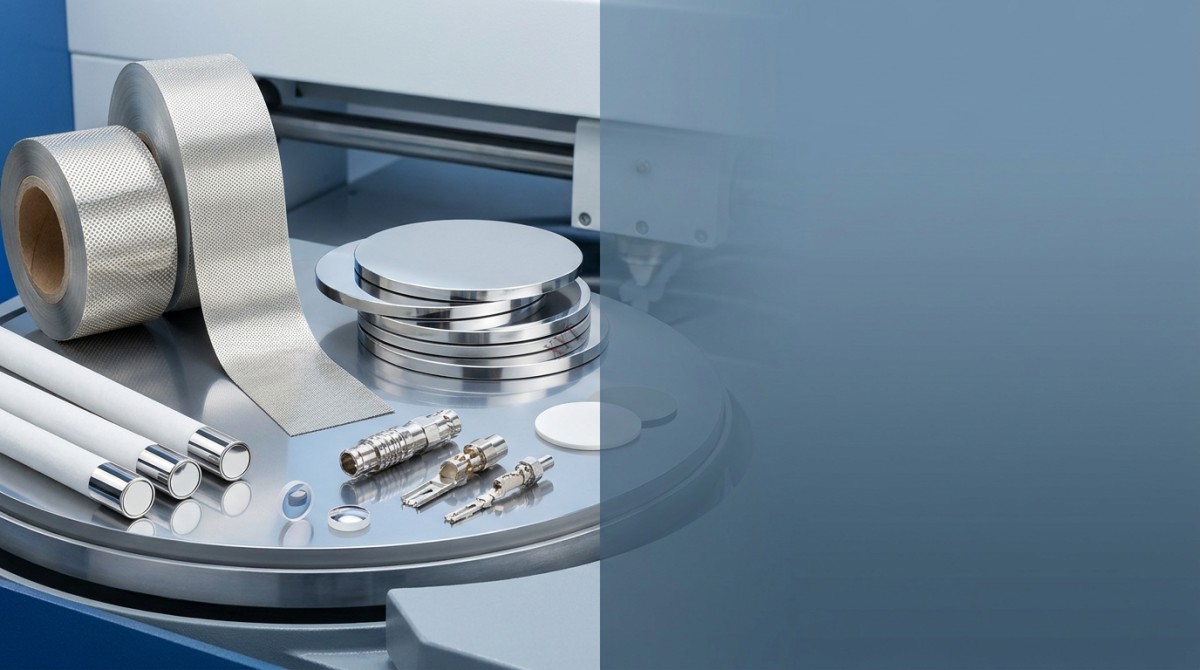
In electrical equipment and supplies, polishing is rarely cosmetic alone. It often affects contact stability, optical transmission, thermal behavior, sealing quality, and wear resistance.
A poor abrasive choice can create micro-scratches, embedded particles, edge rounding, or unstable removal rates. Those issues may reduce component consistency and increase rework.
Diamond lapping film is typically selected when hardness, flatness, and repeatable cutting action matter most. Alumina is often considered where cost sensitivity and general finishing needs dominate.
The real decision is not simply harder versus cheaper. It is about matching abrasive characteristics to material type, process stage, finish requirement, and throughput target.
Electrical equipment production frequently involves ceramics, ferrules, hardened metals, glass, semiconductor-related surfaces, connector end faces, precision shafts, and coated parts. These substrates respond differently under load.
That is why Diamond lapping film versus alumina should be judged by application scene, not only by nominal grit size or unit price.
How application context determines whether Diamond lapping film or alumina fits better
The same abrasive can perform well in one process and fail in another. Context defines the right answer.
When substrate hardness is the first decision factor
Hard ceramics, carbides, sapphire-like surfaces, and many technical glasses often favor Diamond lapping film. The abrasive maintains cutting ability where alumina may slow down quickly.
On softer metals or less demanding finishing steps, alumina can be adequate. It may provide acceptable results when aggressive stock removal is unnecessary.
When surface geometry must stay tightly controlled
Electrical connectors, sealing faces, sensor substrates, and optical interfaces often require strict geometry. Consistent abrasive action becomes more important than initial media cost.
Diamond lapping film usually delivers a more predictable cut on hard materials. That helps maintain flatness and reduce variation between batches.
When contamination risk matters
Particle shedding and embedding can damage electrical or optical performance. Residue on contact areas may alter reliability.
High-quality Diamond lapping film with controlled coating and particle distribution often supports cleaner processing. Alumina performance depends heavily on film quality, backing, and process control.
When cycle time drives process economics
Abrasive cost alone can mislead. Faster finishing, fewer passes, and less scrap can make Diamond lapping film more economical overall.
Alumina may still be the right choice for lower hardness materials, lighter finishing, or less critical dimensions. The total process cost must be evaluated, not only consumable price.
Scenario one: fiber optic connector end-face polishing
Fiber optic connectors are among the clearest cases where abrasive selection affects product performance directly. End-face geometry and scratch control are critical.
Ferrules are often ceramic-based, which is hard and wear resistant. That usually makes Diamond lapping film highly effective during key polishing stages.
Core judgment points in connector polishing
- Need for low scratch count near the fiber core
- Stable ferrule removal without random deep lines
- Control of apex offset and radius
- Repeatability across high-volume batches
Diamond lapping film is often preferred for coarse, intermediate, and fine steps on ceramic ferrules. It cuts efficiently and supports tighter process repeatability.
Alumina can be used in selected finishing steps, especially where softer removal and cost balance are acceptable. However, it may be slower on hard ferrule material.
In connector production, Diamond lapping film often reduces total polishing time. Better consistency can also improve insertion loss and return loss outcomes indirectly.
What often goes wrong in this scene
Choosing alumina based only on lower purchase cost may increase pass count. That can offset savings through higher labor time and more process drift.
Using Diamond lapping film without matching pressure and sequence can also create avoidable defects. The media must fit the polishing recipe.
Scenario two: optical components used in electrical and sensing systems
Optical lenses, windows, prisms, and sensor-related surfaces appear widely in electrical systems, inspection devices, laser modules, and measurement equipment.
These parts often require low subsurface damage and controlled transition from grinding to fine polishing. Material type heavily influences the abrasive decision.
Where Diamond lapping film shows stronger fit
Hard optical materials generally benefit from Diamond lapping film in early and intermediate stages. Its sharpness improves removal efficiency and supports better dimensional control.
For high-end optics, process engineers often move through carefully stepped grit sizes. This reduces random damage before final finishing chemistry takes over.
Where alumina may still be useful
Alumina can support certain finishing operations on less demanding optical surfaces. It may be used when removal rates can be lower and a gentler abrasive response is acceptable.
Still, on very hard substrates, alumina often loses efficiency. Surface quality may become inconsistent if process time is extended too far.
A useful selection reference is Diamond VS Aluminum Oxide VS Silicon Carbide Lapping Film Comprehensive Lapping Film Grit Size Chart. It helps compare grit ranges, removal behavior, and application fit across abrasive materials.
Scenario three: ceramic substrates, insulators, and electronic packaging parts
Ceramic materials are common in electrical equipment because of insulation strength, thermal stability, and wear resistance. They are also difficult to finish well.
Typical examples include alumina ceramics, zirconia parts, insulating plates, seal rings, and electronic packaging components. Flatness and edge integrity are critical.
Key decision logic
When stock removal is meaningful and the ceramic is hard, Diamond lapping film usually provides more stable throughput. Its cutting action remains effective over the process cycle.
Alumina may suit lighter finishing or softer ceramic grades. Yet the process window can narrow when hardness rises or batch uniformity becomes more demanding.
Why this matters in electrical assemblies
Insulator flatness can affect assembly pressure distribution. Surface defects may initiate cracking, leakage paths, or sealing issues under thermal cycling.
Diamond lapping film is often chosen where ceramic integrity and process repeatability carry more value than minimum consumable cost.
Scenario four: metal contact parts, shafts, and precision mechanical interfaces
Electrical equipment includes many precision metal parts. These include connector hardware, motor shafts, relay surfaces, bearing-related parts, and sealing interfaces.
Here the choice between Diamond lapping film and alumina depends more on hardness, coating condition, and finish target than on material family alone.
When alumina is often a practical option
For many steels, non-ferrous metals, and moderate finishing tasks, alumina can provide adequate control. It is widely used for general polishing and intermediate finishing.
If the part is not extremely hard and mirror-level accuracy is not the only goal, alumina may offer a reasonable process balance.
When Diamond lapping film becomes advantageous
Hardened tool steels, coated surfaces, and high-precision metal interfaces often respond better to Diamond lapping film. Stable micro-cutting can improve finish consistency.
This matters when friction, wear, noise, or rotational accuracy is sensitive to surface variation. Electrical assemblies with moving interfaces benefit from better control.
Scenario five: semiconductor-related and wafer-adjacent polishing tasks
Some electrical equipment production overlaps with semiconductor tooling, packaging, fixtures, and precision support parts. In these scenes, tolerances are extremely tight.
Surface finish, contamination control, and scratch risk are major concerns. Abrasive consistency becomes a first-order requirement.
Selection implications
Diamond lapping film is often favored for hard, brittle, or precision-critical surfaces. Its controlled performance helps support process reproducibility and lower defect exposure.
Alumina may be used in less demanding support operations. However, it is less often the first choice when absolute precision dominates the decision.
Performance comparison by scene: Diamond lapping film vs alumina
Understanding cutting behavior: why Diamond lapping film often feels more consistent
Diamond is harder than alumina. That basic fact influences wear behavior, edge retention, and removal stability during polishing.
On hard substrates, Diamond lapping film tends to keep cutting instead of rubbing. That reduces the risk of long process times with declining efficiency.
Alumina can still polish effectively, especially on suitable materials. Yet on very hard surfaces, cutting may become less stable as grains dull or process pressure changes.
Consistency matters because unstable removal leads to uneven finish. In electrical equipment, that may influence fit, contact, insulation distance, or optical signal quality.
What consistency means in practical terms
- More predictable material removal per cycle
- Less need for frequent compensation
- Lower variation between lots
- Fewer unexpected scratches
- Better support for automated polishing routines
Surface finish quality by requirement level
Not every process needs the same finish quality. Choosing the right abrasive means matching the finish target to the application scene.
Coarse correction and shape generation
When the goal is faster stock removal on hard materials, Diamond lapping film usually has the advantage. It can shorten the path toward final geometry.
Intermediate scratch refinement
Both media can serve here, depending on substrate and quality target. Diamond lapping film stays stronger on hard technical materials.
Fine and ultra-fine polishing
For high-value components, abrasive quality and grit accuracy become decisive. Diamond lapping film can deliver very fine, controlled finishing on demanding surfaces.
Alumina may still achieve good fine finishes in compatible applications. The difference is often process robustness rather than finish potential alone.
How grit size strategy changes the decision
Grit size selection affects more than roughness. It shapes defect carryover, process time, and final consistency.
For many hard materials, Diamond lapping film supports a more efficient grit progression from coarse to ultra-fine stages. Larger jumps can risk residual damage.
A practical framework includes coarse grits from 60 µm to 30 µm, medium grits from 15 µm to 6 µm, fine grits from 6 µm to 1 µm, and ultra-fine grits down to 0.01 µm.
Those ranges are useful when comparing Diamond lapping film, alumina, and silicon carbide across grinding and polishing sequences in industrial settings.
Selection guidance by process stage
- Use coarse media only when shape correction or major stock removal is required.
- Reduce grit step size when scratch sensitivity is high.
- Match abrasive type to hardness before choosing nominal grit alone.
- Validate final stages under real pressure and lubricant conditions.
Cost comparison by real production scene, not unit price
Alumina often looks less expensive at purchase. In low-demand applications, that can be true in total cost as well.
But cost must include process time, media consumption, machine occupancy, scrap, inspection failures, and rework. Diamond lapping film can outperform alumina economically in harder applications.
Questions that reveal true polishing cost
- How many passes are needed to reach target finish?
- How stable is removal over the full batch?
- How often does the process drift out of tolerance?
- What is the defect cost of scratch-related rejects?
- How much operator adjustment is required?
In electrical equipment manufacturing, one polishing defect can affect assembly, testing, or field reliability. That makes total process cost especially important.
Contamination and cleanliness concerns in high-precision polishing scenes
Clean processing is vital for optical connectors, sensor parts, semiconductor-adjacent components, and high-reliability electrical interfaces.
Abrasive residue, backing debris, and uncontrolled particle release can create hidden reliability issues. Film construction quality matters as much as abrasive chemistry.
Why manufacturing quality of the film matters
Precision coating, uniform particle distribution, controlled bonding, and in-line inspection all influence consistency. These factors affect both Diamond lapping film and alumina products.
High-grade production environments, including cleanrooms and strict quality systems, can reduce defect variation in polishing consumables significantly.
This is especially relevant where optical-grade surfaces or tight electrical tolerances are involved. Abrasive media quality should be verified, not assumed.
Different application needs at a glance
Application-fit recommendations for common polishing scenes
Choose Diamond lapping film when
- The substrate is ceramic, carbide, glass, or another hard material.
- Surface geometry must remain tightly controlled.
- Scratch consistency is critical to electrical or optical performance.
- High throughput is needed on demanding substrates.
- Process repeatability is worth more than lowest consumable price.
Choose alumina when
- The material is softer or easier to polish.
- The finishing requirement is moderate, not ultra-critical.
- Budget pressure is high and cycle time is less sensitive.
- The process step is intermediate or general-purpose finishing.
Consider mixed abrasive workflows when
Many lines perform best with a staged approach. Diamond lapping film may handle hard removal steps, while alumina supports later refinement where appropriate.
This can balance quality and cost if the transition points are validated carefully.
Common scene-based mistakes and overlooked factors
Mistake one: selecting only by abrasive name
Diamond lapping film and alumina each vary by coating quality, backing, grit distribution, and intended use. Product grade matters.
Mistake two: comparing equal grit numbers as if performance must match
Nominal grit does not guarantee equal cutting behavior across abrasive materials. Hardness and grain shape change the effective result.
Mistake three: ignoring part hardness variation
Coatings, heat treatment, and composite structures can alter polishing response. A media choice that works on one lot may fail on another.
Mistake four: underestimating process settings
Pressure, speed, lubricant, pad condition, and dwell time can decide whether Diamond lapping film or alumina performs well. Media alone cannot fix poor settings.
Mistake five: evaluating only initial finish
Some defects become visible only after cleaning, coating, bonding, or optical testing. Polishing qualification should reflect the final use environment.
How a one-stop polishing partner supports better scene matching
Precision polishing success often depends on more than one consumable. Film, liquid, pad, oil, and equipment settings interact as a system.
A supplier with broad abrasive coverage can help compare Diamond lapping film, aluminum oxide, silicon carbide, cerium oxide, and silicon dioxide under the same application target.
That matters in electrical equipment because product lines may span fiber optics, optics, automotive electrical parts, aerospace components, metal processing, rollers, and micro motors.
Integrated capability also improves process transfer. The same source can align consumables with polishing liquids, pads, and precision equipment.
In advanced manufacturing, consistency comes from formulation control, automated coating, in-line inspection, cleanroom standards, and disciplined quality management.
This system-level approach is especially valuable where Diamond lapping film must deliver repeatable results across multiple factories or international supply chains.
A practical selection workflow for deciding between Diamond lapping film and alumina
- Identify the exact substrate, including hardness, coating, and brittleness.
- Define the polishing stage: rough, intermediate, fine, or final.
- Set measurable targets for roughness, flatness, geometry, and defect tolerance.
- Estimate true production cost, including time and reject exposure.
- Run side-by-side trials using matched process conditions.
- Review cleaning behavior and downstream test results, not only in-process appearance.
- Lock the abrasive sequence only after confirming batch repeatability.
This workflow prevents overbuying and underperforming at the same time. It also helps determine whether Diamond lapping film should replace alumina completely or only in selected steps.
What the comparison means for future process upgrades
Electrical equipment is moving toward tighter tolerances, smaller features, higher optical performance, and more demanding reliability standards. Polishing media must keep pace.
As parts become harder and more precision-driven, Diamond lapping film gains importance. It supports application upgrades where alumina may no longer provide enough process stability.
At the same time, alumina remains useful in many moderate or cost-sensitive finishing tasks. The future is not one abrasive replacing all others.
The better trend is smarter segmentation. Each polishing scene should use the abrasive that matches its actual technical and economic requirement.
Final decision guidance and next step
If the application involves hard ceramics, optical components, connector ferrules, semiconductor-related surfaces, or strict geometry control, Diamond lapping film is often the stronger choice.
If the task centers on softer materials, general metal finishing, or moderate quality targets, alumina may still be a sensible option.
The best answer comes from scene-based validation, not assumptions. Material hardness, finish target, process stage, and total cost must be reviewed together.
For structured abrasive selection across grit sizes and materials, review Diamond VS Aluminum Oxide VS Silicon Carbide Lapping Film Comprehensive Lapping Film Grit Size Chart. It can help translate polishing needs into a more reliable media choice.
When a polishing line needs better finish consistency, faster throughput, or more stable quality on hard substrates, testing Diamond lapping film against current alumina steps is a practical next move.
A controlled trial with defined metrics will show where Diamond lapping film creates measurable value in electrical equipment production, and where alumina remains fully adequate.
Awesome! Share to:
Related Posts
- ◉ What technical support should I expect from a lapping film vendor?
- ◉ How to maintain batch-to-batch consistency in connector polishing?
- ◉ Is dry polishing better than wet for MTP connector finishing?
- ◉ What waste disposal requirements apply to polishing slurry in 2026?
- ◉ How to scale a polishing process from prototype to mass production?
Get in Touch
*We respect your confidentiality and all information are protected.