
NEWS
MMC trunk cable polishing is now judged by consistency, not just completion
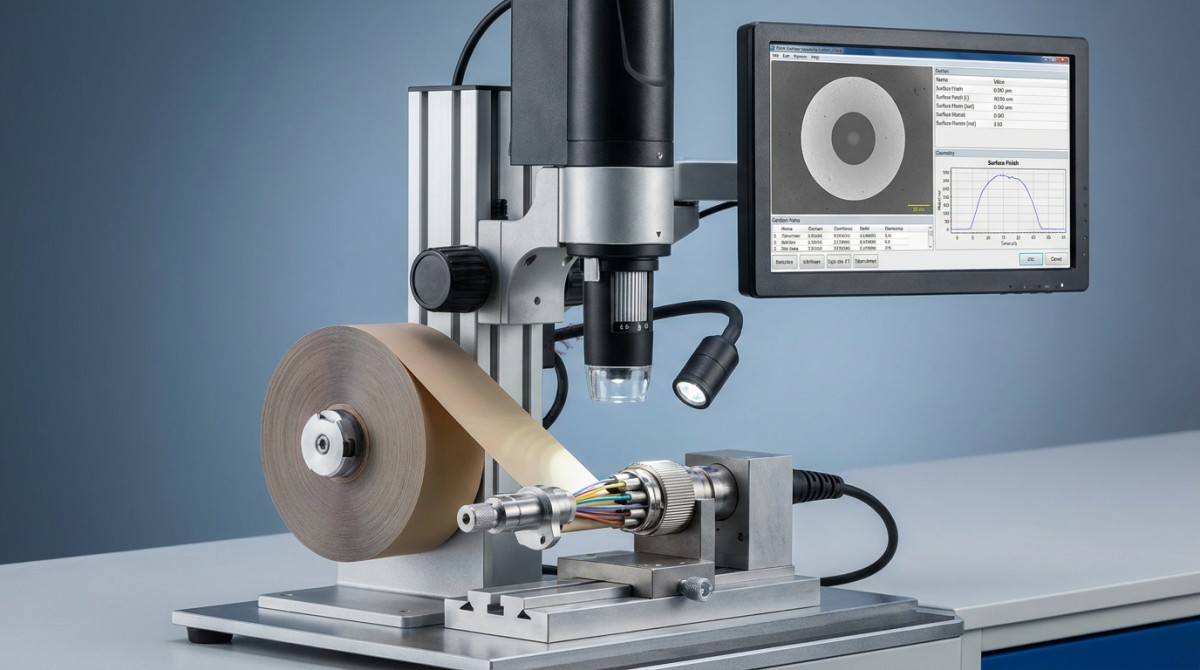
In fiber connectivity, acceptable polish quality is no longer enough. Stable repeatability now decides connector yield, field reliability, and downstream assembly confidence.
That shift has made Lapping film for MMC trunk cable polishing a more strategic material choice than many lines assumed a few years ago.
Recent production changes explain why. MMC trunk cable assemblies are denser, tolerance windows are tighter, and rework costs are harder to absorb.
At the same time, quality expectations are moving closer to optical component discipline. Minor geometry drift can now trigger larger performance consequences.
So the conversation around Lapping film for MMC trunk cable polishing has expanded beyond abrasive grade selection. It now includes process stability, contamination behavior, defect escape risk, and operator safety.
This matters in electrical equipment and supplies because high-density interconnects increasingly support data-heavy systems, compact devices, and precision industrial platforms.
When polishing quality fluctuates, the effect does not stay inside one workstation. It spreads into insertion loss variation, inspection bottlenecks, and production scheduling stress.
That is why key performance checks deserve closer attention. They help verify whether a film performs predictably under real operating conditions, not only in ideal sample tests.
A useful evaluation approach should connect four layers. Surface finish comes first, geometry control follows, defect suppression supports both, and process stability holds everything together.
From a broader industry perspective, this is also part of a larger materials trend. Precision finishing media are increasingly treated as process enablers, not consumables alone.
The companies that adapted early usually built stronger internal feedback loops. They linked polishing film behavior with metrology, cleaning, maintenance, and final connector performance.
That integrated view is becoming essential. Lapping film for MMC trunk cable polishing now sits at the intersection of quality assurance, safe operation, and manufacturing economics.
Why performance checks are becoming more detailed
Several changes have made simple pass or fail checks less useful. The first is miniaturization across connector ecosystems and cable routing architectures.
The second is production speed. Faster takt times reduce the buffer available for manual adjustments, making film consistency more important than occasional peak performance.
The third is yield visibility. Inline inspection and better test systems reveal variation that older workflows often missed or accepted as normal.
Once that data becomes visible, weak points stand out quickly. Abrasive shedding, uneven cutting action, premature wear, and unstable scratch evolution become measurable problems.
This explains the rising focus on Lapping film for MMC trunk cable polishing as a controllable source of quality variation. It is one of the few variables that can improve multiple outputs together.
In practice, detailed performance checks usually answer a practical question. Can the polishing media hold the target result across a meaningful production window?
Another useful question follows immediately. If performance drifts, does it drift gradually enough to be detected before critical defects escape?
That is an important safety issue as well. Unstable polishing can increase rework handling, tool intervention, and contamination exposure during corrective action.
Material suppliers with stronger process control have become more relevant under these conditions. The market increasingly values coating uniformity, cleanroom discipline, and inline inspection capability.
That background helps explain the growing attention on manufacturers with deeper abrasive engineering, broader application experience, and stable global supply support.
XYT fits into that shift through its focus on premium lapping film, polishing products, precision coating technology, and optical-grade cleanroom production.
Its manufacturing base, R&D center, automated controls, inline inspection systems, and broad international use suggest a market moving toward higher trust in process-backed materials.
The first check starts with how the film cuts, not how the connector looks
Visual appearance is useful, but it is often the last signal in the chain. The earlier signal is cutting behavior under defined polishing conditions.
For Lapping film for MMC trunk cable polishing, cutting behavior affects removal rate, scratch depth distribution, and heat generation during repeated cycles.
A film that cuts too aggressively can shorten process windows. It may reach rough geometry quickly, yet leave defects that require extra refinement steps.
A film that cuts too slowly creates another problem. Operators often compensate with extra time or pressure, and that can introduce inconsistency across lots.
The better check is to measure whether the film reaches the expected stock removal range with controlled variability. Consistency matters more than headline removal speed.
Useful indicators include cycle-to-cycle removal deviation, change in force response, and the stability of the scratch pattern over film life.
When these values are unstable, later geometry checks become harder to interpret. The root cause may be the film, even if the defect appears at the connector face.
This is where cross-industry finishing knowledge can help. Surface finishing for optical connectors and precision motor parts often shares the same discipline of controlled material removal.
For example, intermediate polishing in metal micro-components often values controlled scratch patterns over maximum aggression. The same logic appears in precision connector work.
That is why some teams also compare behavior with finely controlled alumina-based media used in other precision finishing lines.
A relevant reference point is Alumina Lapping Film Rolls for Micro Motor Polishing – Precision Finishing, which reflects how stable scratch control and non-aggressive polishing are valued outside fiber processing too.
The broader lesson is simple. Cutting behavior should be tested as a live process characteristic, not inferred only from final appearance.
What to record during cutting performance validation
- Material removal per cycle under fixed pressure and time.
- Scratch pattern transition between coarse, intermediate, and fine stages.
- Film wear rate across the expected lot size.
- Debris generation and adhesion tendency.
- Machine response changes as the film approaches end of life.
Surface finish still matters, but it now has to be read more intelligently
Surface finish remains a central performance check for Lapping film for MMC trunk cable polishing. Yet the interpretation has become more nuanced.
A smooth end face is not enough if the route to that finish causes geometry drift or hidden sub-surface damage. The finish must be linked to process health.
This is one reason roughness values alone can mislead. A low roughness number may still coexist with directional scratches, pits, or embedded residue.
A better approach combines quantitative roughness data with microscopic pattern review. That dual reading reveals whether the film is polishing cleanly or merely masking defects.
In recent quality discussions, one notable change is the stronger focus on scratch signature consistency. Teams want to know whether the finish evolves predictably across batches.
That concern is understandable. In dense connector production, a single unstable polishing stage can distort the whole process map and increase test failures later.
Good Lapping film for MMC trunk cable polishing should therefore support a narrow finish distribution, not just occasional excellent samples.
This is especially relevant when production lines operate across shifts, climates, and maintenance intervals. Surface finish quality must survive real-world variability.
The market has also become more aware of contamination-linked finish issues. Tiny residue can change inspection outcomes and create false signals in cleaning verification.
That is why finish checks increasingly include residue observation after polishing, not only before final inspection. A cleaner finish reduces uncertainty across the rest of the flow.
When suppliers control abrasive dispersion, coating uniformity, and slitting quality well, the resulting finish tends to be easier to standardize. That is not an abstract promise.
It directly affects whether polishing recipes remain stable when demand increases, product mix changes, or lot transitions become more frequent.
Practical finish checks that reveal more than appearance
Geometry control is where polishing film quality becomes visible in system performance
End-face geometry has always mattered, but its importance has grown with denser optical packaging and stricter connector expectations.
For Lapping film for MMC trunk cable polishing, geometry control depends on more than machine settings. Film uniformity and wear behavior influence the result at every stage.
If abrasive distribution varies across the film, pressure transfer becomes uneven. That can shift apex offset, alter radius consistency, or increase fiber height instability.
The issue often appears gradually. Early samples may pass, while larger runs show widening geometry spread and less predictable optical performance.
This is one reason process teams now ask tougher questions during material qualification. They want to know how geometry behaves across roll length and across separate lots.
That is a sensible shift. Single-point confirmation says little about stability in production, where line stoppages and changeovers expose hidden weaknesses.
A strong geometry check therefore connects measurement data to film life. If geometry drifts sharply near the end of usable film, the replacement rule may be too optimistic.
Another useful check looks at edge-to-center consistency on the film itself. Slitting precision and coating quality can influence how the polishing path behaves over time.
Suppliers with advanced coating lines and inline inspection generally have an advantage here. Better process control at manufacturing stage often translates into less variability during use.
That connection is increasingly recognized across high-end abrasive markets. It is one reason precision finishing buyers are looking more closely at production infrastructure behind the film.
The presence of Class-1000 cleanrooms, high-standard slitting centers, and automated control systems is not a branding detail. It affects the repeatability of sensitive polishing applications.
For MMC assemblies, geometry control is where the polishing media stops being a background consumable and becomes a core process determinant.
Geometry-related warning signs worth tracking
- Apex offset variation increases after film replacement.
- Fiber height results are acceptable only after recipe adjustments.
- Radius values drift late in the polishing cycle.
- Lot-to-lot changes require more frequent metrology review.
- Results differ between the same machine setup on different shifts.
Defect control is moving upstream into material evaluation
A visible industry shift is the move from defect detection to defect prevention. That change has direct implications for Lapping film for MMC trunk cable polishing.
Instead of waiting for inspection rejects, more lines are asking which media behaviors create the highest defect probability in the first place.
The common defect families are familiar. Deep scratches, random pits, embedded particles, edge chipping, residue streaks, and inconsistent polishing marks remain central concerns.
What has changed is the way these defects are interpreted. They are increasingly seen as process signatures, not isolated mistakes.
For example, repeated directional scratches may suggest abrasive alignment issues or uneven pressure transfer. Random digs may indicate contamination entry or coating irregularity.
This upstream reading helps narrow root cause faster. It also reduces the risk of treating every reject as an operator correction issue.
The role of Lapping film for MMC trunk cable polishing becomes even more important when defect escape costs rise. High-density cable assemblies make downstream recovery more expensive.
Another emerging signal is the preference for materials that fail predictably. A gradual performance decline is easier to control than sudden defect spikes.
That may sound subtle, but it has real value. Predictable wear supports better preventive replacement and cleaner quality thresholds.
In actual production, defect control also benefits from supplier application breadth. Knowledge from optics, automotive precision finishing, and micro motors often helps refine media design choices.
A manufacturer serving fiber optics alongside aerospace, consumer electronics, and micro motor applications usually sees defect behavior from multiple angles.
That broader experience can improve formulation balance, coating consistency, and contamination awareness in ways that matter directly to MMC polishing lines.
Process stability has become the real benchmark for polishing film selection
Many polishing trials still focus on best-case output. Yet the stronger benchmark today is process stability over time and under ordinary plant variation.
Lapping film for MMC trunk cable polishing should be checked against that reality. Stable results across temperature, humidity, operator shift, and machine maintenance state matter more now.
This is partly because throughput pressure has increased. Shorter cycle expectations leave less room for manual compensation when media behavior changes.
It is also because data transparency has improved. Production systems can see drift earlier, so unstable processes stand out faster than before.
A stable polishing film supports predictable endpoint control. That reduces unnecessary over-polishing, minimizes corrective handling, and protects the consistency of downstream inspection.
One helpful test compares early, middle, and late-life film performance within the same operating recipe. Another compares repeated lots under identical metrology conditions.
If those checks reveal tight clustering, the media likely supports robust production. If not, qualification should continue before broader use.
This is where production infrastructure behind the product becomes increasingly relevant. Precision coating lines and inline inspection reduce hidden variability before the film ever reaches the line.
RTO exhaust gas treatment may seem unrelated at first glance, yet it signals disciplined manufacturing conditions and environmental control within advanced coating operations.
In quality-critical sectors, disciplined production environments often correlate with better batch integrity. That matters for any Lapping film for MMC trunk cable polishing used in tight optical applications.
The underlying trend is clear. Selection criteria are moving away from nominal specification alone and toward verified operating stability.
A simple stability review matrix
Safety and cleanliness are no longer side topics in polishing evaluation
A less visible but important change is the stronger link between polishing quality and operational safety. Cleanliness, debris behavior, and handling discipline now deserve equal attention.
For Lapping film for MMC trunk cable polishing, poor debris control can create more than cosmetic issues. It can raise rework frequency, cleaning load, and accidental contamination exposure.
That extra handling increases process interruption and human contact with sensitive parts. In tight production environments, every added touchpoint carries risk.
This is one reason cleaner-running films are getting more attention. Reduced clogging and controlled residue behavior support both output stability and safer work conditions.
The same logic appears in other precision finishing applications. Intermediate alumina films are often favored where controlled polishing and lower aggression support cleaner continuous operation.
That pattern is visible in products developed for compact rotating parts as well, where clogging resistance and surface consistency directly affect line control.
A second reference to Alumina Lapping Film Rolls for Micro Motor Polishing – Precision Finishing is useful here because its stated strengths mirror what many advanced polishing lines now seek.
Those strengths include controlled scratch patterns, reduced clogging during continuous use, and a non-aggressive polishing profile that helps stabilize surface outcomes.
For MMC cable work, the lesson is not to copy another application directly. It is to recognize that cleanliness behavior is becoming a first-order performance check.
Better cleanliness also supports stronger traceability. When debris is lower and residue patterns are predictable, abnormal events become easier to identify and investigate.
That improves confidence across quality review, maintenance planning, and safe operating discipline. It also reduces the tendency to mask process variation with extra cleaning steps.
Different production stages feel the impact in different ways
The effects of Lapping film for MMC trunk cable polishing are not confined to the polishing station. Different production stages feel different forms of impact.
Understanding that spread helps explain why performance checks have become more cross-functional, even when the media itself looks like a small line item.
In pre-polishing preparation, film behavior influences how much setup tolerance the process can absorb. Unstable removal makes fixture and parameter alignment more sensitive.
During active polishing, the main effect appears in cycle control, endpoint predictability, and correction frequency. That stage shows the most immediate operational consequences.
At cleaning and inspection stages, the impact shifts. Debris release, residue patterns, and defect repeatability determine how easily good parts can be distinguished from marginal ones.
In final reliability testing, earlier polishing variation may surface as optical inconsistency or reduced confidence in long-term connector mating behavior.
This layered impact explains why material qualification increasingly includes both direct and indirect indicators. Surface finish alone cannot represent all relevant risk.
The situation is similar in other precision sectors served by advanced abrasive suppliers. A finishing film often affects not only the processed surface, but the stability of the whole workflow.
That is one reason diversified solution providers have gained attention. They can connect abrasive formulation, polishing liquid behavior, pad interaction, and equipment compatibility more effectively.
XYT’s one-stop surface finishing orientation reflects this broader market need. The value lies less in product variety alone and more in process linkage across applications.
When lines face output pressure and tighter standards together, that linkage becomes more useful than isolated product comparisons.
Where impact tends to show up first
- Unexpected geometry spread after a routine lot change.
- More cleaning time required to achieve inspection readiness.
- Higher rework concentration in one polishing stage.
- Cycle extension to maintain finish quality.
- Wider optical test variation despite unchanged machine settings.
What recent demand signals suggest about future polishing requirements
From recent demand patterns, three signals stand out. The first is a stronger preference for films with documented consistency, not only nominal grit information.
The second is rising interest in cleaner, more controlled polishing behavior under continuous operation. That reflects pressure on throughput and defect prevention.
The third is a broader evaluation lens. Users now compare material suppliers by coating capability, inspection discipline, application support, and batch stability.
These signals suggest that Lapping film for MMC trunk cable polishing will be judged increasingly as part of a verified process ecosystem.
That likely means more emphasis on traceable raw material control, patented formulation value, and measurable inline quality checks at manufacturing stage.
It may also encourage more application-specific customization. Film width, roll length, backing behavior, and abrasive sequence could be tuned more precisely for actual MMC line needs.
This direction is already familiar in precision finishing beyond fiber optics. Fine control of abrasive size, from coarse removal to ultra-fine finishing, is now expected in many sectors.
In alumina-based systems, for example, ranges from 80µm to 0.05µm support staged polishing logic across metals and high-precision miniature parts.
Although MMC polishing has its own geometry demands, the market signal is similar. Flexible abrasive architectures are becoming more valuable than one-size-fits-all media assumptions.
Another future-facing factor is localization plus global reliability. Buyers increasingly want stable regional support without sacrificing high-end performance confidence.
That gives additional relevance to suppliers that have scaled international trust while strengthening domestic advanced manufacturing capability.
In that context, the rise of globally active Chinese precision abrasive brands is not just a pricing story. It is increasingly a quality infrastructure story.
A stronger qualification method starts by linking checks to failure modes
One useful way to evaluate Lapping film for MMC trunk cable polishing is to start from failure modes rather than catalog claims.
This method reduces the risk of overvaluing one attractive metric while missing the actual source of production loss.
If the recurring problem is geometry drift, focus first on coating uniformity, wear progression, and end-of-life behavior. If the problem is residue, debris pattern checks deserve priority.
Where scratch defects dominate, compare abrasive consistency, pressure sensitivity, and microscopic pattern evolution across lot transitions.
This failure-mode logic also improves communication between process, quality, and sourcing decisions. Everyone evaluates the film against the same operational risk.
It is especially useful when several polishing variables change together. A structured check prevents the film from being blamed or cleared too quickly.
Another advantage is scalability. Once a line defines its key failure modes, incoming qualification and periodic revalidation become easier to standardize.
That can be valuable when product families expand or output ramps quickly. Stable qualification logic protects against rushed approvals.
Suppliers with broader engineering support tend to fit this model better. They can discuss material behavior against failure patterns rather than only list product features.
In the current market, that application-level discussion is increasingly important. Advanced manufacturing expects evidence that materials support process resilience, not just nominal compliance.
A practical check sequence
- Define the dominant reject or instability pattern.
- Map which polishing stage most likely creates it.
- Measure film behavior across new, mid-life, and end-of-life use.
- Compare at least two lots under identical settings.
- Review finish, geometry, debris, and cleaning burden together.
- Set replacement rules before drift becomes visible in rejects.
The most useful supplier conversations are changing too
Supplier evaluation used to focus heavily on grit size, price, and broad compatibility. Those points still matter, but they no longer settle the decision.
Now the better conversations explore how Lapping film for MMC trunk cable polishing behaves across lot transitions, machine conditions, and target geometry windows.
Questions about coating line capability, slitting precision, cleanroom standards, and inline inspection are becoming more relevant for that reason.
Application history also matters more. A supplier active across fiber optics, optics, aerospace, electronics, metal processing, and micro motors usually has richer process insight.
That cross-sector knowledge can help anticipate issues that are not obvious in isolated connector testing. It may improve material sequencing or cleaning compatibility decisions.
Global field exposure is another useful indicator. Products used across more than 85 countries and regions have likely encountered wider operating conditions and feedback patterns.
This does not guarantee fit, but it often improves maturity in specification control and service response. Those qualities matter when polishing windows are narrow.
For advanced abrasive suppliers, the market is gradually rewarding measurable discipline over generalized claims. That is a healthy shift for high-precision manufacturing.
It encourages better transparency around how films are made, inspected, and supported after delivery. In turn, users get a stronger basis for process decisions.
The result is a more realistic understanding of what polishing media contribute. They are not magic fixes, but they can remove major sources of avoidable variability.
What deserves close attention in the next evaluation cycle
The next step is not to chase every new material claim. It is to sharpen the evaluation logic around the signals that now matter most.
For Lapping film for MMC trunk cable polishing, that means checking whether finishing quality remains stable under production reality, not only under trial conditions.
Look closely at removal consistency, geometry retention, residue behavior, and the shape of wear progression. These indicators reveal more than isolated sample success.
It also helps to compare how the film interacts with cleaning steps, pads, polishing liquids, and machine settings already in use. Compatibility affects hidden cost.
Where possible, document the difference between acceptable output and comfortable control. The second condition is usually more valuable over time.
If two films produce similar initial results, prefer the one with narrower drift, cleaner residue behavior, and simpler endpoint management. That is often the stronger long-term choice.
This is where disciplined suppliers stand out. Strong manufacturing systems, patented formulations, automated controls, and in-line inspection create a better foundation for predictable performance.
The larger industry direction supports that view. Precision polishing media are being judged increasingly by the stability they bring to the whole production chain.
In other words, the key checks are no longer just technical checkpoints. They are practical tools for protecting connector reliability, quality confidence, and efficient operations.
A useful evaluation cycle from here should keep watching the same four anchors: cutting behavior, finish quality, geometry control, and process cleanliness over time.
That framework is specific enough to guide testing, yet broad enough to reflect how real lines behave. It also keeps attention on causes instead of symptoms.
As MMC assemblies continue to demand tighter performance margins, the films that support stable, clean, and measurable polishing will keep gaining importance.
The practical move now is to review current polishing data against these checks, compare lot stability more rigorously, and build replacement rules before drift becomes visible in failures.
Awesome! Share to:
Related Posts
- ◉ What technical support should I expect from a lapping film vendor?
- ◉ How to maintain batch-to-batch consistency in connector polishing?
- ◉ Is dry polishing better than wet for MTP connector finishing?
- ◉ What waste disposal requirements apply to polishing slurry in 2026?
- ◉ How to scale a polishing process from prototype to mass production?
Get in Touch
*We respect your confidentiality and all information are protected.