
NEWS
Why does lapping film matter so much in TMT ferrule polishing?
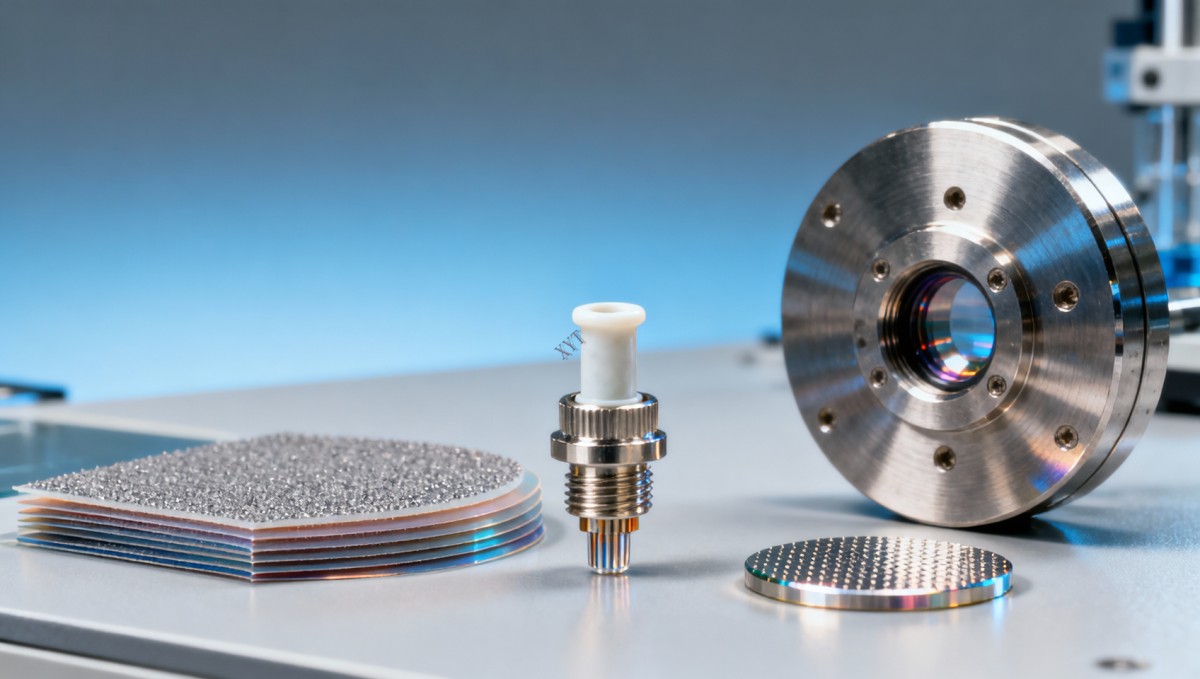
In TMT ferrule polishing, the film is not a minor consumable. It directly shapes end-face geometry, scratch depth, removal rate, and process stability.
That is why Lapping Film TMT ferrule polishing gets so much attention in fiber optic finishing, electrical interconnection reliability, and precision optical assembly.
A ferrule may look simple from the outside. In practice, its polished face controls alignment, optical loss, physical contact quality, and long-term connection consistency.
If the wrong film is selected, problems usually appear fast. Scratch lines remain visible, apex offset drifts, or the final surface refuses to clean up.
If the film sequence is well matched, the process becomes calmer. Removal is predictable, cycle time shortens, and rework drops without forcing pressure upward.
This matters especially in electrical equipment and related components where fiber optic connectors support signal transmission, sensing, control links, and high-density assemblies.
The common mistake is to treat all polishing films as interchangeable if the grit number looks similar. Real process behavior is more complex than that.
Backing stiffness, abrasive grading, coating uniformity, resin behavior, and debris release all influence how the ferrule face evolves across each polishing stage.
So the core question is not only which grit to buy. It is which film system fits your ferrule material, machine settings, target geometry, and defect tolerance.
A practical selection approach starts from process goals. Are you trying to improve throughput, reduce random scratches, stabilize RL, or simplify film changes?
Each goal may point to a different choice. A faster-cutting film is not always the best finishing film, and a very fine film cannot fix poor pre-polish damage.
In actual production, end-face quality depends on a chain. Film quality, pad condition, pressure, platen speed, cleaning discipline, and ferrule material work together.
That is also why advanced suppliers invest in coating technology, in-line inspection, cleanroom control, and abrasive formulation rather than selling grit numbers alone.
XYT, for example, built its precision polishing capability around coated abrasive manufacturing, process control, optical-grade cleanrooms, and strict quality inspection.
That background matters because ferrule polishing is sensitive to contamination, abrasive clustering, and film-to-film variation. Stable manufacturing makes downstream polishing easier to control.
So before comparing options, it helps to frame one basic idea clearly. Lapping Film TMT ferrule polishing is really a process matching problem, not just a purchasing decision.
What exactly should you evaluate before choosing a lapping film?
Most selection errors come from evaluating only one factor, usually grit size. That is too narrow for reliable TMT ferrule polishing.
A better evaluation starts with six linked questions: what material is being polished, what stage you are in, what geometry is required, how stable the machine is, how much variation can be tolerated, and what defect matters most.
Ferrule material comes first. Zirconia behaves differently from glass-based parts, silicon structures, or specialty photonic assemblies.
Abrasive type should follow that material behavior. Diamond usually cuts harder materials efficiently, while alumina, SiO₂, CeO₂, or SiC may fit other stages or surface objectives better.
Then ask where the film sits in your sequence. Coarse stock removal, shape correction, intermediate refinement, and final finish each need different removal behavior.
Using an aggressive film too late can create deep defects that the final stage cannot erase. Using a slow film too early stretches cycle time without improving quality.
Geometry targets matter just as much as appearance. A shiny end face may still fail if radius, apex, or fiber height fall outside specification.
This is why film selection must be tied to pressure and platen speed. The same film can behave very differently at 1 N and 6 N.
For many precision optical polishing steps, a process window such as 1–6 N contact pressure and 30–120 rpm platen speed is a useful starting reference.
However, a starting range is not the same as a fixed recipe. Ferrule fixture design, pad hardness, slurry use, and ambient cleanliness can shift the ideal setting.
The best way to evaluate Lapping Film TMT ferrule polishing choices is to compare them against the defects you are actually seeing, not the ones you assume.
For example, random isolated scratches often suggest contamination or large rogue particles. Uniform haze may point to the previous stage not being fully removed.
Edge chipping can relate to pressure balance, fixture alignment, ferrule condition, or a film that cuts too sharply for the current stage.
If you want a fast decision tool, the table below helps connect common questions with practical film selection checks.
A balanced evaluation also includes film format. Sheets, discs, rolls, and die-cuts may perform similarly abrasively but differ in handling efficiency and setup stability.
If repeatability matters across many stations, pre-cut formats can reduce alignment errors and operator variation. If flexibility matters more, sheets or rolls may help.
Another point often missed is backing construction. Durable polyester backing usually gives better dimensional stability under pressure than weaker alternatives.
That stability becomes important when geometry is tight, especially in connectors and photonic components where small shape shifts can affect signal performance.
In short, Lapping Film TMT ferrule polishing decisions should be based on process evidence. Material, stage, machine window, backing, abrasive, and defect pattern all need to align.
How do grit sequence and abrasive type affect ferrule end-face results?
This is where many polishing lines either become efficient or remain permanently unstable. Grit sequence controls how damage is reduced from one stage to the next.
A good sequence does not merely get finer each time. It removes the previous stage completely without leaving unnecessary scratch depth for later films to chase.
For precision connector work, a sequence such as 30 → 15 → 9 → 3 → 1 → 0.5 µm is widely useful as a reference structure.
Still, the ideal stopping point and transition timing depend on your ferrule design, target RL, inspection method, and the actual stock removed at each step.
Coarse films shape the face and remove epoxy or protrusion. Medium films refine the damage profile. Fine films bring the surface into a low-defect optical state.
Trouble begins when the jump between stages is too large. Then a fine film spends too much time correcting damage instead of finishing the surface.
That raises heat, extends cycle time, and often increases wear on both the film and pad. Surface gloss may improve while hidden sub-surface damage remains.
Abrasive type changes the feel of each stage. Diamond is known for aggressive, controlled cutting on hard ceramics and many optical materials.
Alumina is often chosen for balanced refinement in suitable steps. Silicon carbide can cut effectively but must be matched carefully to the surface goal.
Cerium oxide and silicon dioxide are more associated with fine finishing behavior in certain optical applications where defect suppression and surface chemistry matter.
That does not mean one abrasive is universally superior. It means each one carries a different removal mechanism and damage profile.
In Lapping Film TMT ferrule polishing, the right abrasive is the one that produces the next stage’s ideal starting surface, not just the fastest cut.
Uniform coating also matters here. Tightly graded abrasives and even particle distribution make the sequence more predictable from lot to lot.
Electrostatic coating technology is valuable because it helps distribute abrasive more evenly, reducing clustering that can lead to isolated scratches.
This is particularly important in fiber optic connectors such as LC, SC, FC, MU, and MPO/MTP, where defect-free polishing directly supports IL and RL performance.
The same logic extends into photonics, semiconductors, fiber arrays, lenses, windows, PICs, and laser module surfaces. Surface quality requirements often become stricter, not looser.
A practical way to assess your sequence is to inspect after each stage, not only at the end. That tells you where the damage reduction actually stalls.
If a 3 µm stage still shows remnants of 15 µm damage, the problem is usually upstream. The 1 µm film cannot rescue that efficiently.
Another useful test is to compare total process time rather than time per film. A slightly longer intermediate step can shorten the total cycle if the final stage becomes easier.
Where process optimization is needed, it helps to review specialized options such as Polishing Films for Precision Optical & Photonic Applications | XYT Lapping Film, which cover multiple abrasive types and precision finishing formats.
The value of such systems is not only product range. It is the ability to match abrasive, backing, and format to the actual polishing path.
So when someone asks whether grit or abrasive type matters more, the honest answer is this: they matter together, and sequence discipline is what turns them into repeatable results.
If defects keep appearing, is the film really the problem?
Sometimes yes, but not always. Defects in TMT ferrule polishing often come from interactions between film, machine setup, cleaning, and handling.
This is why changing film brands without diagnosing the process can create confusion. The symptom moves, but the root cause stays.
A disciplined troubleshooting approach starts by identifying the defect type clearly. Not all scratches are the same, and not all haze means poor finishing.
Broadly speaking, defects usually fall into five groups: contamination marks, residual prior-stage damage, geometry instability, edge damage, and inconsistent removal.
Contamination marks are often random. They may show up as isolated long scratches or sudden abnormal lines on an otherwise good surface.
In those cases, look at storage, work surface cleanliness, pad debris, fixture contamination, and whether films are exposed too long before use.
Residual prior-stage damage is more uniform. You may see a repeated scratch texture that persists even after several finer steps.
That usually indicates incomplete material removal at an earlier stage or a jump that is too aggressive between grit levels.
Geometry instability is different again. The surface may look acceptable under simple visual inspection, but apex or radius results drift batch to batch.
When that happens, check film backing stiffness, fixture parallelism, platen flatness, pressure repeatability, and pad wear before blaming abrasive size alone.
Edge damage often points to pressure concentration, ferrule loading issues, or an abrasive that is too harsh for the stage and support condition.
Inconsistent removal can come from uneven coating, partial film glazing, variable lubrication, or too much heat during the polishing cycle.
The following checklist helps separate film-related issues from process-related ones more quickly.
- Check whether the defect repeats in the same stage across different batches.
- Inspect unused film surface for contamination before mounting.
- Confirm pad condition and replacement frequency.
- Verify pressure and platen speed are within a stable process window.
- Review cleaning between every grit transition.
- Compare microscope images after each stage, not only final output.
- Track defect rate by film lot and storage duration.
In practice, many polishing lines underestimate storage. Films can absorb environmental contamination long before they are put on the machine.
Humidity shifts, dust exposure, careless stacking, and poor packaging discipline all increase random defect risk. This is one reason controlled storage centers matter.
Manufacturing control upstream also matters. Suppliers with automated control systems, in-line inspection, and stable coating lines tend to produce more consistent polishing behavior.
That consistency is not marketing language. In Lapping Film TMT ferrule polishing, small coating variations can become visible as large process drift.
Another common misconception is that final defects should be fixed by switching only the finest film. Usually that is the least efficient adjustment.
If sub-surface damage was created two stages earlier, the final film may simply reveal it more clearly. The repair belongs upstream.
So yes, the film can absolutely be the problem. But the right troubleshooting habit is to treat the film as part of a controlled finishing system.
What is the smartest way to balance quality, cycle time, and consumable cost?
This is often the most practical question, because the lowest film price rarely gives the lowest process cost.
In ferrule polishing, total cost comes from much more than consumables. It includes rework, scrap, downtime, changeovers, inspection load, and unstable optical results.
A film that cuts cheaply but inconsistently can quietly become the most expensive choice in the line.
The smarter way to evaluate cost is to calculate cost per conforming end face, not cost per sheet or per disc.
That changes the decision quickly. A more stable film often lowers total process cost by reducing repeat polishing and shortening the final finishing stage.
Cycle time should also be read carefully. Shortening one step is not useful if it creates geometry correction work later.
The best Lapping Film TMT ferrule polishing setup usually balances three outcomes together: predictable removal, low defect transfer, and manageable film life.
Here are the cost drivers that deserve close attention during trials.
- Average number of ferrules completed before film replacement.
- Rate of rework caused by residual scratches or geometry drift.
- Time spent cleaning between stages.
- Inspection burden needed to catch unstable output.
- Process interruption when film format is difficult to mount consistently.
- Variation between lots that forces recipe adjustment.
Format choice plays into cost more than many expect. Pre-cut discs or die-cuts can reduce mounting time and human error, which becomes meaningful in repetitive operations.
On the other hand, rolls or sheets may reduce material waste in flexible or lower-volume conditions. The best option depends on the station layout and replacement frequency.
Another hidden cost is process instability from weak technical matching. When abrasive type and ferrule material do not align, pressure may be increased to compensate.
That often creates more heat, more pad wear, and more geometric inconsistency. Consumable use appears efficient while the process quietly deteriorates.
A more sustainable approach is to define a qualified operating window for each film stage and keep it narrow enough to manage variation.
For example, if a stage works best near a certain pressure and speed combination, avoid broad operator discretion unless the process has been validated for it.
This is where supplier capability becomes relevant again. Companies with broad abrasive systems and process support can often help shorten the optimization cycle.
XYT’s background in lapping films, polishing liquids, pads, oils, and precision equipment is useful in that sense because polishing economics are system-driven, not film-only.
A one-stop surface finishing perspective can reduce trial-and-error, especially when fiber optics, optics, semiconductors, and other precision industries share similar surface demands.
The practical takeaway is simple. When comparing options, ask which film sequence gives the lowest cost of stable acceptance, not the cheapest first purchase.
Which process details are easy to overlook but strongly affect Lapping Film TMT ferrule polishing?
Many polishing lines focus on abrasive choice and forget the smaller variables that quietly decide whether the film performs as intended.
One overlooked factor is film seating. If the film is not mounted flat and stable, the abrasive cannot contact evenly across the intended polishing zone.
Another is pad compatibility. Even a high-quality film can produce unstable geometry if the support layer underneath is too soft, too hard, or unevenly worn.
Cleaning discipline between stages deserves special emphasis. Fine stages are often blamed for scratches that were actually introduced during transfer.
Water quality, wiping materials, glove cleanliness, and fixture pockets all matter more than they seem. A single hard particle can ruin the value of a fine finishing film.
Machine condition also deserves routine review. Platen flatness, bearing stability, and pressure calibration drift gradually, then show up as “mysterious” polishing variation.
Another easy-to-miss detail is film life tracking. Some lines replace by time, others by part count, others only when quality drops. The last method is usually too late.
A better method is to establish replacement criteria based on validated output stability, not only visible wear. Fine films can degrade before the change is obvious.
Storage and handling deserve their own rules. Keep films sealed, clean, flat, and protected from uncontrolled humidity or airborne contamination.
This matters even more for optical and photonic work, where ultra-smooth surfaces are expected and signal distortion from surface defects is unacceptable.
The same process awareness supports not only fiber connectors but also optical lenses, windows, PICs, V-groove substrates, crystal surfaces, and wafer polishing tasks.
In those applications, flatness, defect control, and repeatability often matter as much as visual smoothness. Surface appearance alone is not a reliable judge.
If your process includes different product types, be careful about using one universal recipe. Similar ferrules may still respond differently depending on material and assembly details.
That is why many high-performing lines create a controlled matrix of film sequence, pressure, speed, time, and cleaning steps for each product family.
When process support is needed across precision optical applications, options such as Polishing Films for Precision Optical & Photonic Applications | XYT Lapping Film are often reviewed because they combine broad abrasive coverage with multiple supply formats.
That matters when the same facility handles connectors, optical modules, or semiconductor-related polishing tasks and wants a more unified control approach.
The most overlooked truth is this: Lapping Film TMT ferrule polishing quality is usually won or lost in routine discipline, not in dramatic changes.
Small consistent habits often outperform constant recipe switching. Stable film supply, careful stage transitions, and verified machine settings deliver the biggest long-term gains.
How should you decide on the next step if you want better end-face consistency?
The best next step is not to rush into replacing every consumable. Start by making the process visible stage by stage.
List the current film sequence, abrasive type, pressure, platen speed, polishing time, pad condition, cleaning method, and defect pattern at each stage.
Then compare those details against the actual output requirements. Are you optimizing for low IL, higher RL, defect-free microscopy, geometry stability, or shorter cycle time?
Without that priority order, film selection becomes reactive. One issue improves while another gets worse.
A useful evaluation path usually looks like this.
- Define the exact defect or instability you need to reduce.
- Inspect results after every polishing stage, not only after final inspection.
- Check whether the current grit transitions are too wide or poorly cleaned.
- Confirm machine pressure and speed remain repeatable within the intended window.
- Review whether abrasive type matches ferrule material and final performance target.
- Run controlled trials on one variable at a time.
- Measure success by accepted output, not by one attractive microscope image.
This approach keeps decisions practical. It also prevents the common mistake of changing grit, pressure, pad, and cleaning method all at once.
If you are comparing suppliers, look beyond catalog range. Ask about coating consistency, abrasive grading, backing stability, available formats, and process guidance.
These points matter because ferrule polishing is a precision finishing task, not a generic abrasion job. Surface performance depends on control, not just material removal.
A supplier with strong production infrastructure can be an advantage here. Cleanroom manufacturing, automated control, in-line inspection, and rigorous quality systems reduce variation before the film reaches your line.
That manufacturing discipline is part of why some polishing products perform more predictably across lots, especially in demanding optical and electrical equipment applications.
XYT’s long-term presence across global markets and its work in fiber optics, optics, automotive, aerospace, consumer electronics, metal processing, and micro motor finishing show the breadth of its process understanding.
For TMT ferrule work, that broader experience can be useful because the fundamentals of defect-free finishing, coating control, and repeatability transfer across industries.
To sum it up clearly, choosing the right film for Lapping Film TMT ferrule polishing means matching the abrasive system to the full polishing path.
The right choice improves more than surface shine. It supports geometry control, lowers defect risk, reduces rework, and keeps cycle time under control.
If results are inconsistent today, begin with evidence. Map the sequence, inspect every transition, confirm the machine window, and compare film behavior under controlled conditions.
That kind of structured review usually reveals whether the real need is a different abrasive, a refined grit path, a cleaner transfer step, or a more stable film supply.
Once those basics are clear, the next decisions become easier, faster, and much more reliable.
Awesome! Share to:
Related Posts
- ◉ What technical support should I expect from a lapping film vendor?
- ◉ How to maintain batch-to-batch consistency in connector polishing?
- ◉ Is dry polishing better than wet for MTP connector finishing?
- ◉ What waste disposal requirements apply to polishing slurry in 2026?
- ◉ How to scale a polishing process from prototype to mass production?
Get in Touch
*We respect your confidentiality and all information are protected.